Compartir:
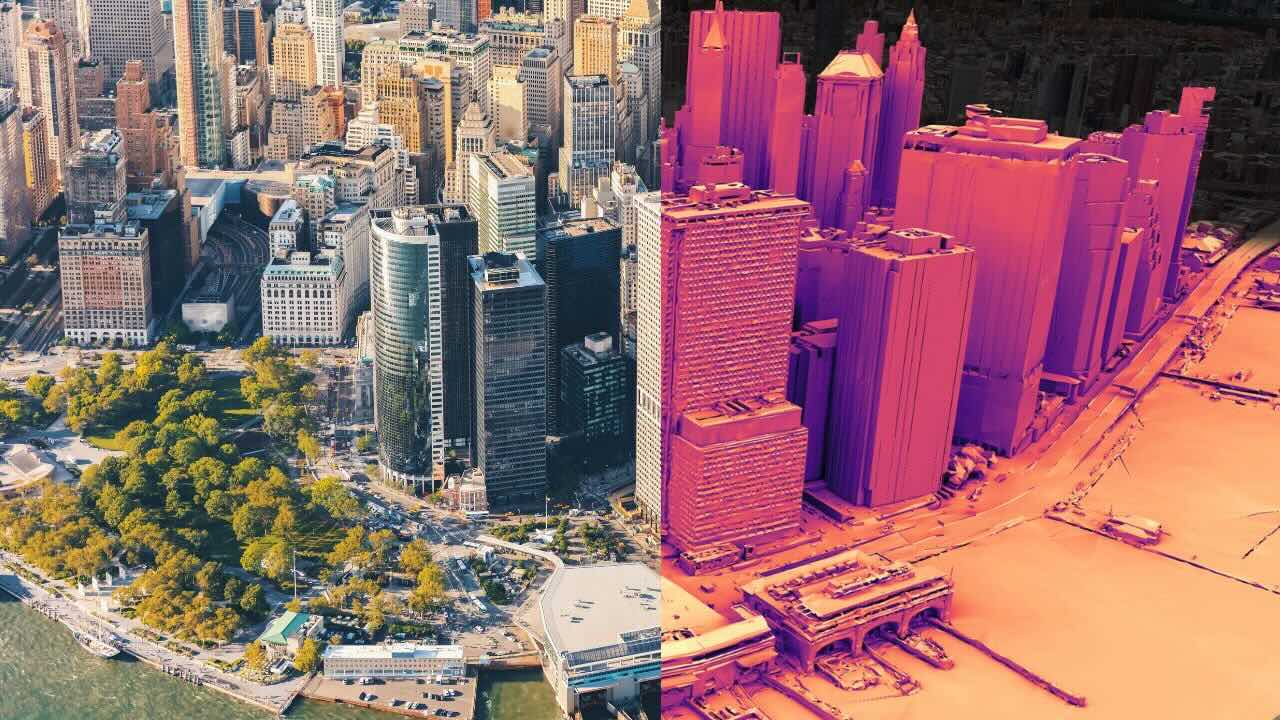
Building-Integrated Photovoltaics (BIPV) lives or dies by one fundamental factor: how a building is oriented toward the sun and how shadows interact with it over time. Unlike conventional rooftop solar, BIPV systems are deeply connected to the building envelope—roofs, façades, and even windows—making solar exposure, orientation, and shadow mapping decisive for efficiency, yield, and economic viability.
For homeowners exploring residential BIPV, and for architects, façade engineers, solar installers, and real estate developers, understanding sunlight in three dimensions is no longer optional. It is the foundation of good BIPV design.
Why Orientation Toward the Sun Is Critical for BIPV
Every BIPV project begins with a simple question:
Which parts of the building actually see the sun—and when?
Unlike rack-mounted solar panels that can be tilted and oriented independently, BIPV is constrained by:
Roof pitch and geometry
Façade orientation (north, south, east, west)
Urban density and surrounding structures
A perfectly integrated solar façade facing the wrong direction or exposed to frequent shading can underperform dramatically—regardless of how advanced the PV technology is.
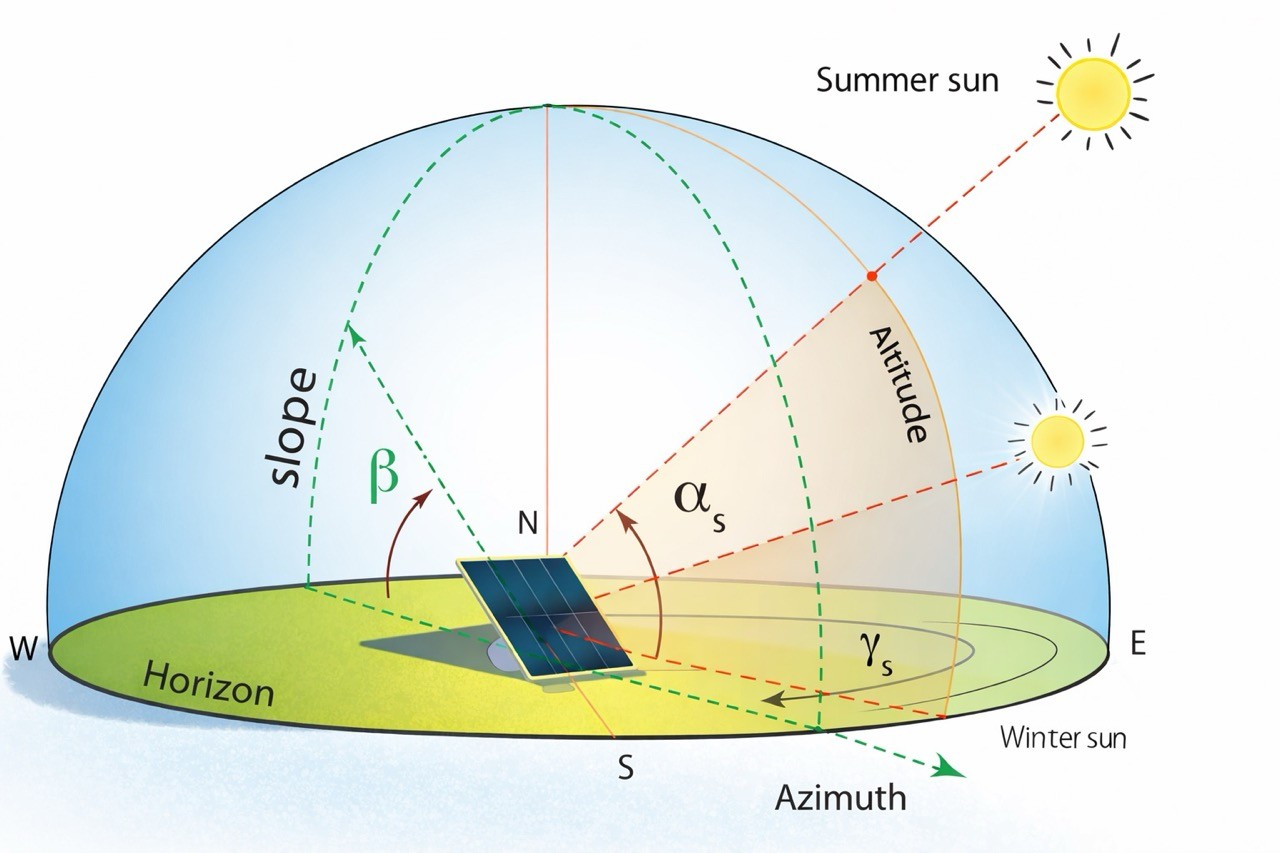
Key orientation factors that affect BIPV performance
Azimuth (direction): South-facing surfaces in the Northern Hemisphere typically perform best, but east- and west-facing façades can deliver strong yields when designed correctly.
Tilt angle: Fixed by architecture, especially for façades and flat roofs.
Seasonal sun paths: Winter sun is low, summer sun is high—façades behave very differently throughout the year.
This makes sunlight analysis and solar design optimization essential early in the planning phase.
Shadows: The Deciding Factor for BIPV Viability
Shadows are often the silent killer of BIPV performance.
Even partial shading from:
Neighboring buildings
Trees
Roof structures, balconies, or parapets
Urban infrastructure…
Can significantly reduce energy yield—especially for façade BIPV, where sunlight angles are already more complex than on roofs.
Why shadows matter more for BIPV than traditional PV
BIPV modules are often vertically or shallowly angled
Shading can occur for long periods, especially in winter
Shaded façade areas cannot be “fixed” later with reorientation
This is why real estate sun studies and shadow mapping are now considered best practice for integrated solar buildings.
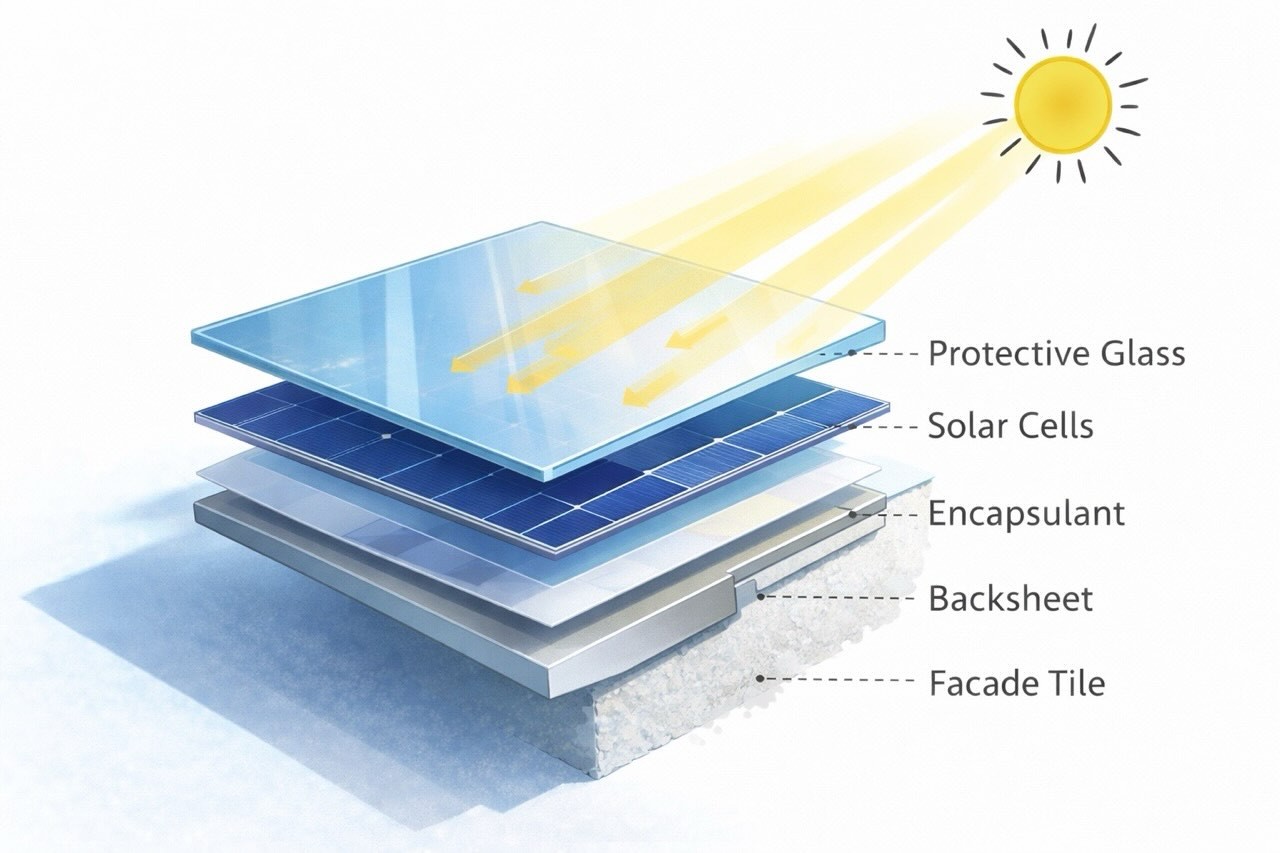
Facade BIPV: Enormous Potential—If Planned Correctly
Facade BIPV is one of the most promising applications of architectural photovoltaics, especially in:
Dense urban environments
Multi-story residential buildings
Commercial and mixed-use developments
Unlike roofs, façades offer large surface areas and remain usable even when roof space is limited. East- and west-facing façades can deliver valuable energy during morning and afternoon peaks—aligning well with real-world energy demand ⚡.
However, façade BIPV only works if:
Solar exposure is understood in 3D
Shading from nearby objects is accurately modeled
Seasonal performance is evaluated, not just annual averages
This is where many traditional solar planning tools fall short.
The Limits of Flat Insolation Maps for BIPV Planning
Many solar planning tools rely on 2D or flat-map insolation models. While these can be useful for basic rooftop PV assessments, they struggle with BIPV—especially façades.
Flat maps typically:
Ignore vertical surfaces or oversimplify them
Fail to model shadow movement accurately over time
Cannot represent complex urban geometry
For façade BIPV, this can lead to overestimated yields, misplaced modules, and poor return on investment.
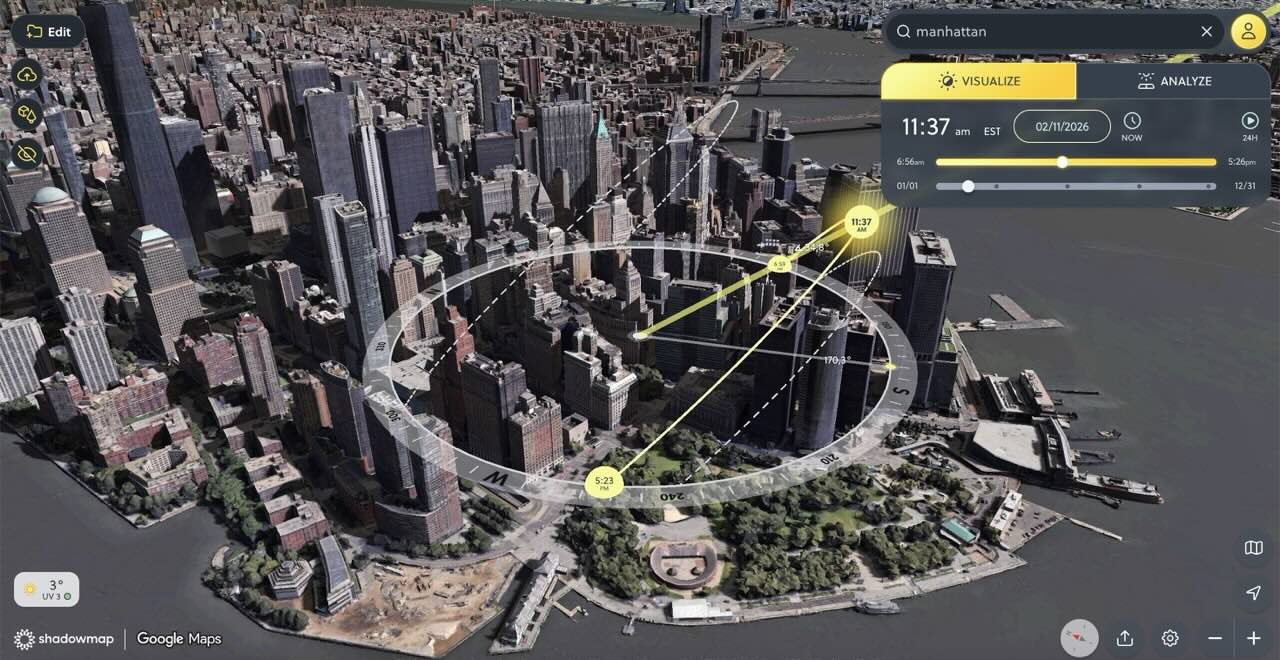
Why Shadowmap Excels at Planning BIPV in 3D
BIPV requires a true three-dimensional understanding of sunlight—and this is where Shadowmap becomes a decisive advantage.
What makes Shadowmap ideal for BIPV planning
Full 3D environment modeling of buildings, terrain, and surroundings
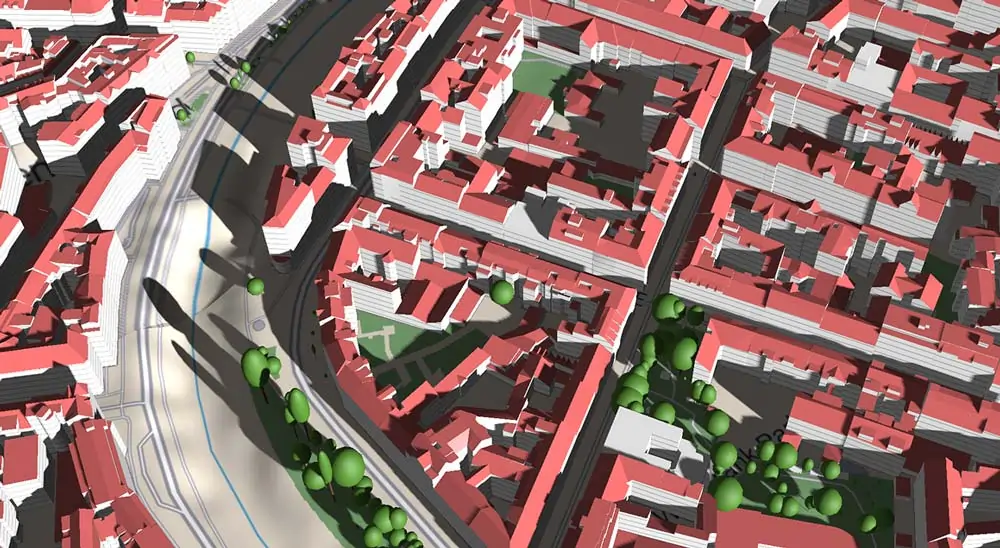
Accurate simulation of moving shadows from all nearby objects
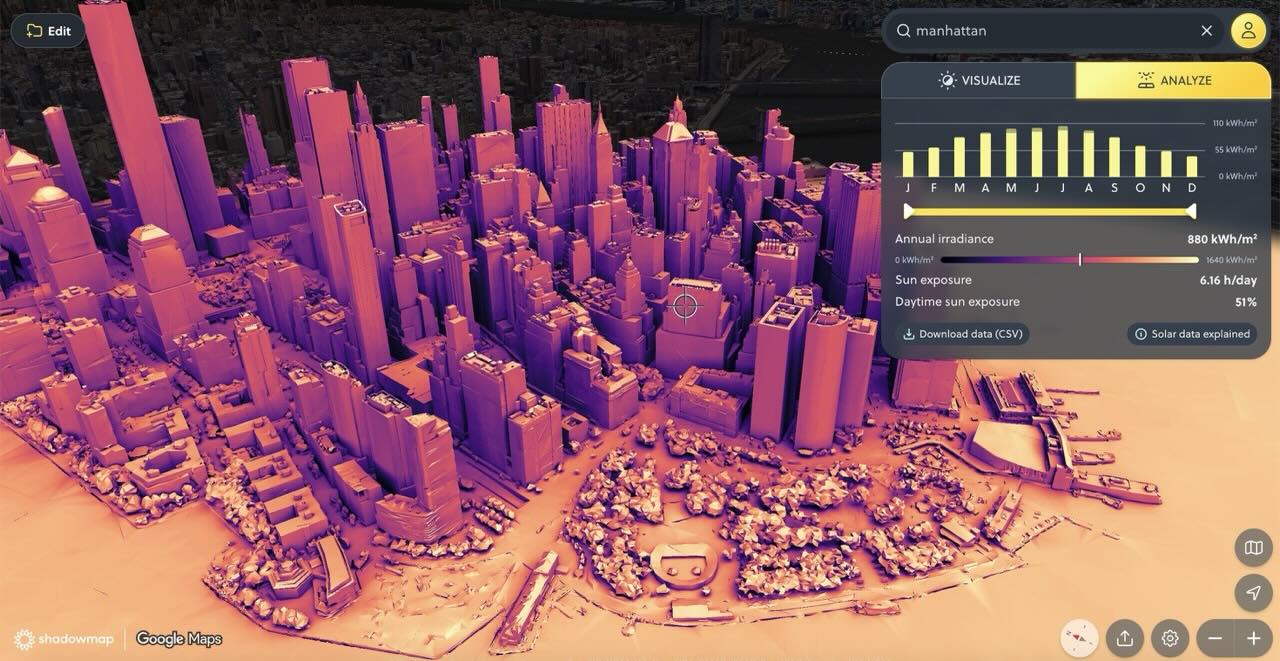
Clear visualization of solar exposure on façades, roofs, and complex geometries
Location-specific sun paths based on real geographic data
Instead of guessing where BIPV might work, designers can see exactly which surfaces receive usable sunlight—and for how long.
Perfect for façade BIPV
Shadowmap allows planners to:
Compare north, south, east, and west façades side by side
Identify partial shading issues early
Optimize placement of façade-integrated PV panels
Evaluate seasonal performance, not just yearly averages
This makes it invaluable for architects, façade engineers, urban planners, energy consultants, and solar professionals—and increasingly useful for homeowners who want confidence before investing.
When BIPV Makes Sense from a Solar Exposure Perspective
BIPV delivers the most value when:
Building orientation is favorable or intentionally optimized
Shading is minimal or well understood
Façades and roofs are designed with solar exposure in mind
Decisions are made early, before construction begins
In these cases, BIPV can:
Replace conventional building materials
Improve energy independence
Increase property value
Support net-zero and solar-ready building goals
Conclusion: BIPV Is Not Just About Technology—It’s About the Sun
BIPV is as much a solar planning challenge as it is a construction or energy solution. The success of residential and professional BIPV projects depends less on module efficiency alone and more on:
Building orientation toward the sun
Accurate shadow mapping
Understanding sunlight in three dimensions
By using tools like Shadowmap that reflect the real-world interaction between buildings, sunlight, and shadows, BIPV can be planned with confidence—especially façade BIPV, where traditional flat-map tools fall short.
In the end, BIPV works best when we design not just for buildings—but for the sun that powers them ☀️
Compartilhar este artigo:
SAIBA MAIS
Visões esclarecedoras



Como visto em