Teilen:

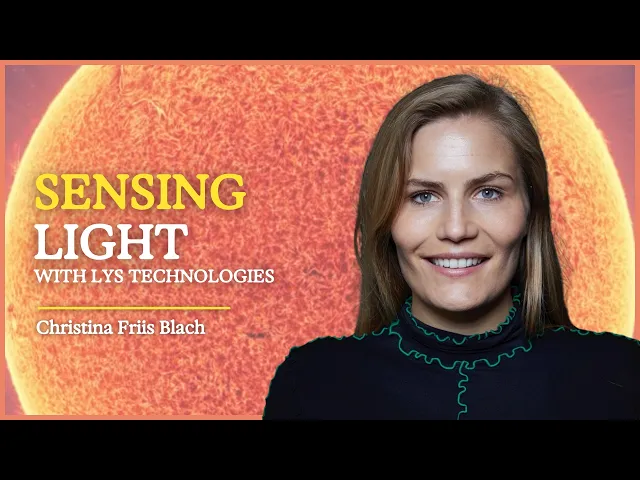
Christina Blach was not supposed to be thinking about light. She was at Imperial College London, enrolled in a joint innovation and design engineering programme with the Royal College of Art, working on a brief from Intel about the future of urban environments. The studio ran late. The only illumination came from overhead fluorescent tubes. And Blach, a self-described health obsessive who had been born with a heart condition and had always been acutely attuned to what her body needed, started to feel awful.
Based on the Sunlight Matters podcast · Christina Blach, Co-founder, Lys Technologies · March 31, 2026
“I’m never really this person who has headaches,” she explains, “but sitting in that fluorescent light I started to have headaches. I was trying to eat all these blueberries and doing all that stuff, but I was just sitting in these environments that felt like they weren’t good for me.” She began to research the science of light and fell into a rabbit hole that would consume the next decade of her life.
The Hidden Photoreceptors
What Blach discovered was a relatively recent breakthrough in biology. In the 1990s, Professor Russell Foster’s group at Oxford identified a third class of light-sensitive cells in the human eye: the intrinsically photosensitive retinal ganglion cells (ipRGCs). We had known about rods and cones for generations; they capture light and construct visual images in the brain. But these newly discovered cells do something entirely different. They sit at the back of the retina, absorb light, and feed it not to the visual cortex but to the brain’s hormone-regulation systems. They are, as researchers call them, Zeitgebers: “time-givers.”
“All of a sudden we knew that light was not only there for us to see — it was also there to time when we produce melatonin, cortisol, all these different important hormones.”
— Christina Blach, Co-founder, Lys Technologies
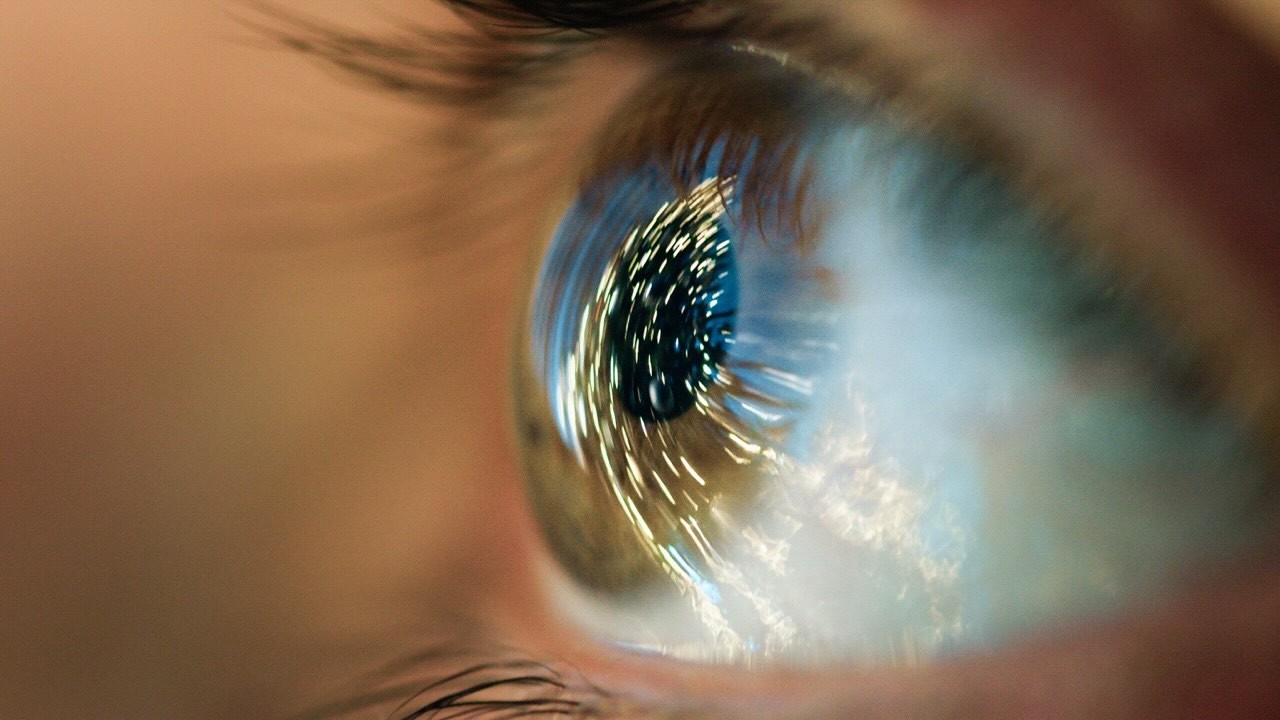
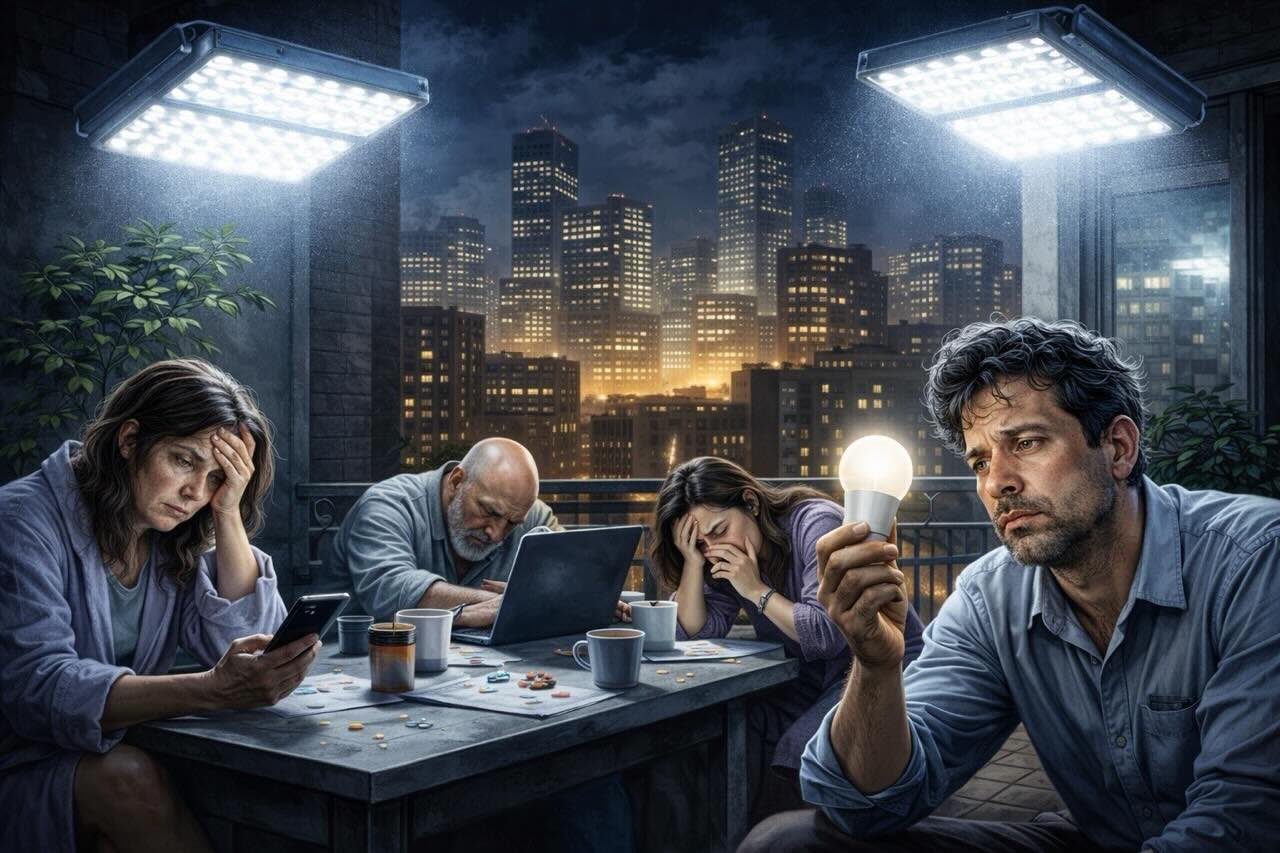
The implications are profound and, until recently, largely ignored by the general public. We have spent decades optimising our lighting environments entirely around vision, while a parallel biological system has been quietly responding to the spectral content of every light source we encounter. The old incandescent bulb, warm and amber, sent a relatively benign signal at night. The modern LED is a different story. Cheap, efficient, and often tuned to a cool, blue-white spectrum, it transmits something close to daylight. Turn it on at midnight, and your body, trusting its ancient photoreceptors, genuinely struggles to understand why it should be producing melatonin. The circadian clock stutters.
The Design Problem
Blach recognised that the science existed, but the tools to bring it into everyday life did not. “When you burn yourself,” she says, “you feel the pain straight away. Whereas when you get the wrong type of light, you might not feel the pain straight away. You get a headache and take a paracetamol. You’re not thinking: maybe it’s because I’m sitting in this horrible light all day.” She wanted to create a feedback mechanism. A way for people to understand, in real time, what their light environment was actually doing to them.
The sensors used to measure light, such as spectrometers and lux meters, are expensive, cumbersome, and designed for controlled laboratory settings or architectural analysis. They measured light in the room, not the light reaching a human eye. And crucially, they were calibrated around the visual system, not the circadian one. What Blach needed was something that could go where people actually went.
How The LYS Sensor is Designed
Worn close to the eye. Positioned near the face to replicate what the retinal ganglion cells actually receive — not ambient room light, but the light entering the eye itself.
Measures melanopic EDI, not lux. Standard lux meters measure brightness for vision. The Lys sensor captures the melanopic equivalent daylight illuminance — the circadian signal, not the visual one.
11-channel sensor (latest version). The first version used an RGB sensor — affordable and sufficient for real-world scenarios. The new model expands to 11 spectral channels, approaching spectrometer-level precision while remaining wearable.
Two app modes. A research-blind mode (participants see only sync confirmation) and a behaviour-change mode that shows personal light data to encourage healthier habits.
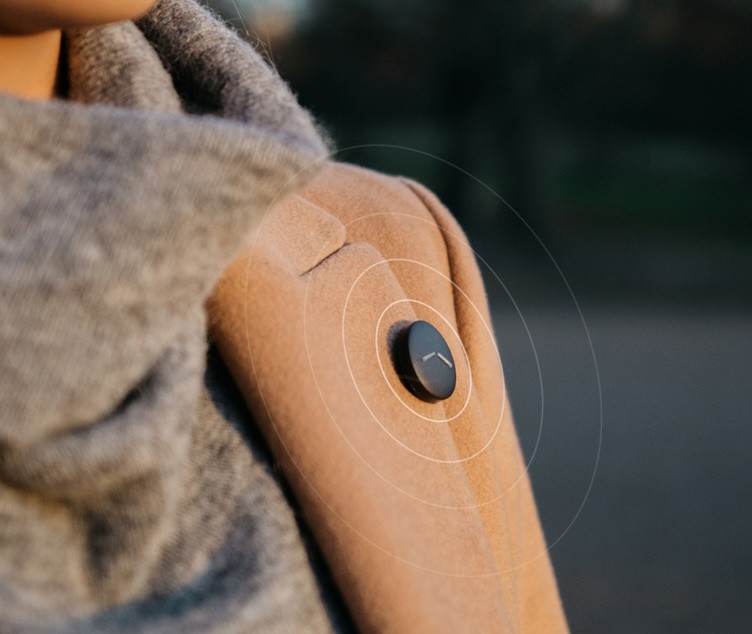
Making a wearable that people actually wore turned out to be at least as hard as the underlying engineering. The device needed to sit close to the eyes without being glasses, which experiments showed people would remove. It had to be small enough to wear in a supermarket without becoming too conspicuous. Battery size, storage capacity, data sampling rate, and price all pulled against each other. Previous tools in this space cost thousands of dollars; Blach wanted something researchers could deploy across large participant groups. “There’s always a design, price, function triangle,” she says. “A lot of the work was finding the spot that hits it.”
From Kickstarter to 55 Countries
The first validation came from an unexpected quarter. LYS launched on Kickstarter and found that the backers of the project read like a who’s who of the industries most likely to be disrupted: employees from Apple, Dyson, and Amazon ordered early units alongside academics from universities around the world. “I was like, wow, okay, there’s something to this space,” Blach recalls. Today, LYS sensors are active in research programmes across more than 55 countries.
55+ countries with active research
11 spectral channels in the latest sensor
10 years since LYS Technologies was founded
Real-World Discoveries
The use cases that have emerged from that research have repeatedly surprised even the researchers involved. One project with the London architecture firm Hawkins Brown asked all employees to wear the sensor for a period. The data revealed something counterintuitive: in summer, workers on the north side of the building received more light than those on the south side, because the south-facing staff pulled their blinds down to block glare, preventing them from reading their screens. The building was designed for views and solar gain; the light reaching human eyes told a completely different story.
Other deployments have ranged from care homes and hospital recovery wards to high-performance sport. The English Institute of Sport used the sensors in the lead-up to the Tokyo Olympics, tracking how athletes’ light exposure changed as they travelled from the UK and modelling strategies to reduce jet lag, whose effects on athletic performance are well-documented but rarely measured with this degree of precision.
“Buildings should adapt to us as humans — not the other way around, with that causing health problems.”
— Christina Blach, Co-founder, Lys Technologies
Perhaps the most striking results have come from behaviour-change studies. EDGE Technologies, which builds some of the world’s most sustainable commercial buildings, gave LYS sensors and a data-visible app to workers across multiple sites. Participants began changing seats in the canteen, choosing spots closer to the windows. They started walking an extra tube stop in the morning to collect daylight before sitting down at a screen. The data gave people a language for something they had always felt but never been able to quantify.
What Comes Next
The latest iteration of the sensor, the 11-channel model, represents a significant step toward resolving a long-standing limitation. The original RGB sensor performed well in the complex, multi-source light environments that humans actually inhabit, but struggled in monochromatic light. “As a researcher, you’d say it’s failing in this area,” says Blach, “but that environment is almost never the one humans are in.” Still, she wanted to close the gap. The new sensor approaches the spectral resolution of a laboratory spectrometer while remaining wearable and affordable.
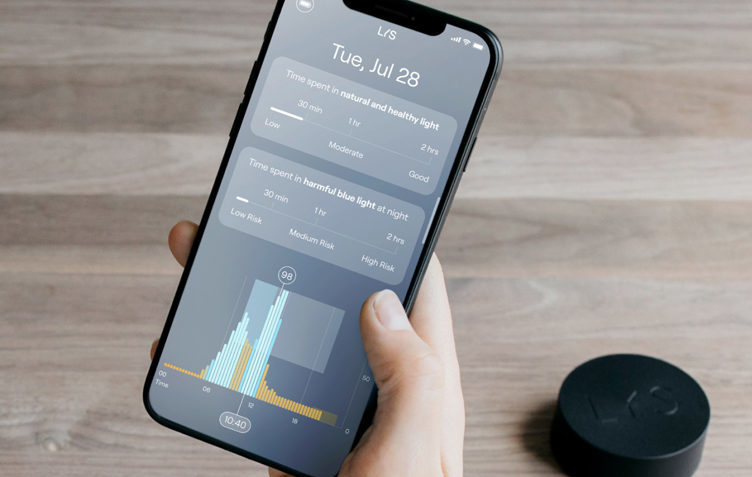
Alongside the hardware, LYS has built chronotype assessment into its app. Pioneered by researchers like Dr Till Roenneberg, whose Munich Chronotype Questionnaire (MCTQ) is a standard tool in chronobiology, the concept of individual chronotype acknowledges that the body’s optimal timing for sleep, food, exercise, and even cognitive performance varies significantly from person to person, and is partly genetic. Light is the primary lever for shifting that timing. Research is now investigating optimal timing for chemotherapy and heart surgery based on individual circadian profiles.
The sensor Blach built to fix her headaches under a flickering fluorescent tube has ended up at the edge of several of biology’s most interesting questions at once. “We need to get out of the church and preach to the rest of the world,” she says, of the challenge of moving light health from niche conversation to mainstream awareness. After ten years and 55 countries, the congregation is at least growing.
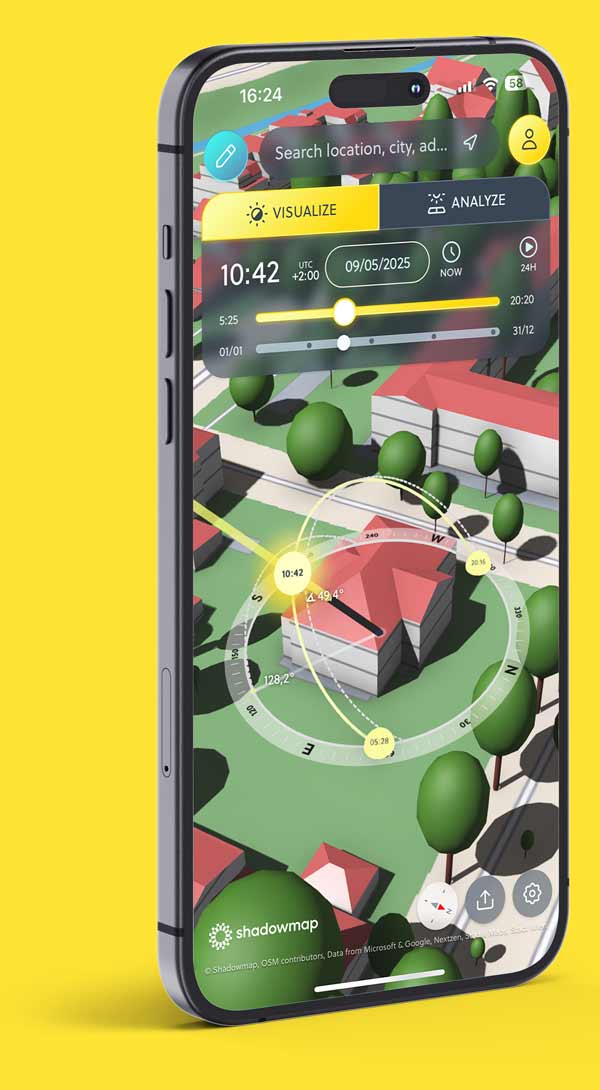
This article is drawn from a conversation with Christina Blach on the Sunlight Matters podcast, hosted by David Wallace of Shadowmap. The Lys Track app, including the chronotype questionnaire, is available free on the App Store.
Diesen Artikel teilen:

MEHR ERFAHREN
Erhellende Einblicke


BEKANNT AUS