Compartir:

Bright days and dark nights used to come naturally. Now, many of us spend our days in dim buildings and our evenings surrounded by electric light. Professor Sean Cain's research suggests this reversal may be affecting our mood, sleep, and mental health far more than we realise.
For most of human history, light followed a simple pattern. Days were bright. Nights were dark. Our bodies evolved around that rhythm.
Modern life has turned it on its head. We spend much of the day indoors, where even a well-lit room is relatively dim. Then, after sunset, we switch on overhead lights and sit in front of televisions, tablets and phones. In effect, we have created muted days and bright nights. Our biology has not caught up.
Professor Sean Cain is a circadian scientist at Flinders University who studies the relationship between light and mental health. As he explains, light does far more than allow us to see. It tells the brain what time it is, helps organise the body's daily rhythms and influences the systems involved in mood and alertness.
The message running through his research is simple: seek out brighter light during the day and protect darkness at night.
Light is information
When light enters the eye, it activates the rods and cones we use for vision. But the retina also contains specialised cells that are especially sensitive to the blue-cyan part of the spectrum. They use a light-sensitive protein called melanopsin and send signals to the brain's central body clock.
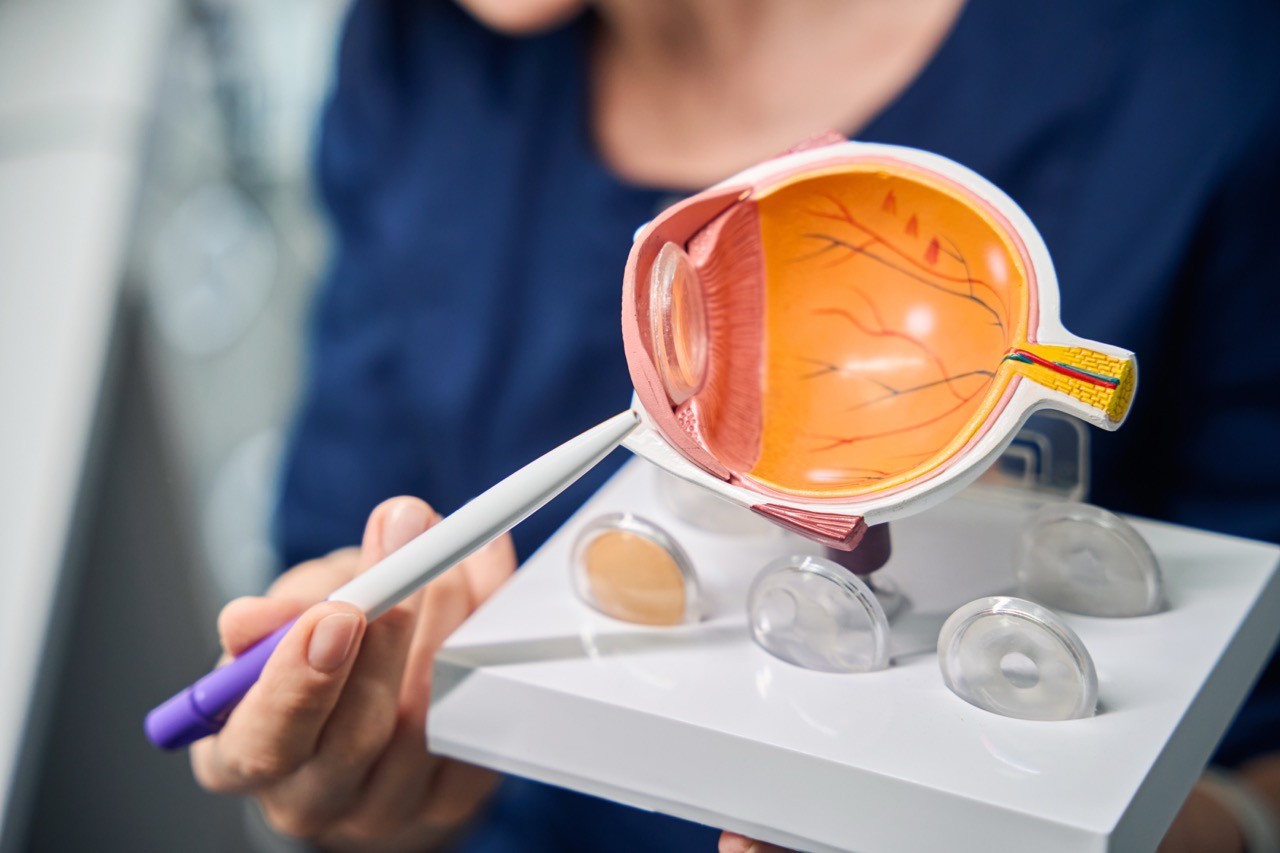
This is a non-visual light-detection system. Its job is to tell the body whether it is day or night. It affects melatonin, the timing of sleep, alertness and the strength of our circadian rhythms, the roughly 24-hour patterns that coordinate processes across the brain and body.
With a strong, regular signal, the body receives a clear message about when to be active and when to rest. If the days are too dim and the nights too bright, that distinction blurs.
Cain describes this as a weakening of circadian amplitude. Put more simply, the difference between biological day and biological night becomes less pronounced. The body's many clocks are left with a less decisive signal about what they should be doing, and when.
The connection with depression
Cain's laboratory has found that people going through a current episode of depression can have unusually low circadian sensitivity to light. In one study, researchers exposed participants to moderate evening light, around the level you might find in an ordinary home, and measured how much it suppressed melatonin.
In those who were currently depressed, there was very little suppression. People who had previously experienced depression but recovered responded much like those who had never experienced it. That suggests the reduced sensitivity to light may be linked to the depressive state itself, rather than being a permanent characteristic of the person.
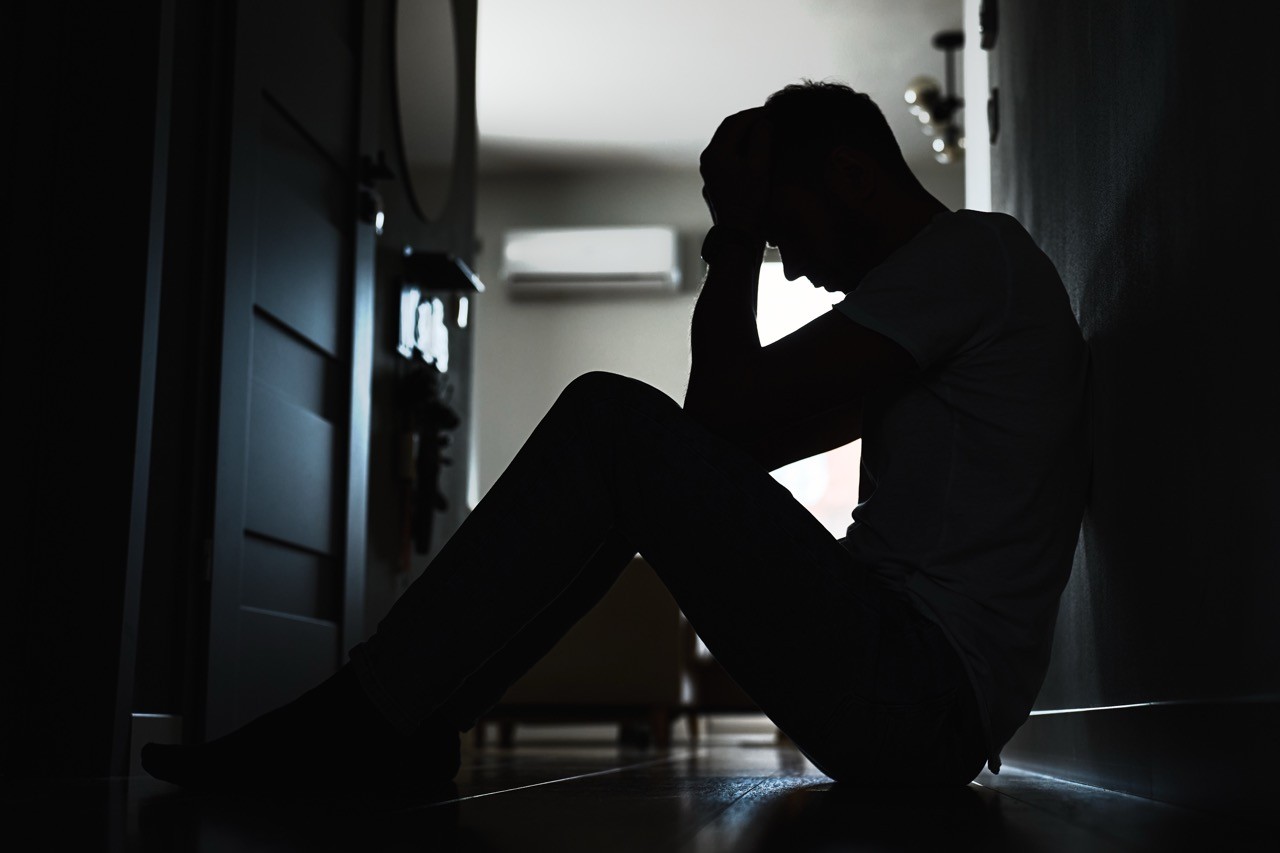
There is an interesting physical dimension here to a familiar description of depression. People often talk about feeling as if they are living in darkness. In more recent work discussed during our conversation, Cain and his colleagues looked at the language people used to describe their illness. Those who used metaphors of darkness were around three times more likely to be experiencing severe depression.
That work has not yet been published, so it should be regarded as preliminary. Even so, it raises an arresting possibility. The language of darkness may sometimes be doing more than describing a feeling. At some level, it may also reflect a light-detection system that is not working normally.
Brighter days, darker nights
In 2023, Cain and his colleagues published a major study in Nature Mental Health. It used light data from almost 87,000 UK Biobank participants. Measuring light with a wrist-worn sensor has limitations, but the dataset's size let researchers see a clear pattern.
People exposed to more light at night were more likely to have several psychiatric disorders. The clearest link was with major depressive disorder. Those receiving the most night-time light had around a 30 per cent greater risk than those receiving the least.
Daytime light pointed in the other direction. Greater exposure to bright light during the day was associated with a lower risk of depression, by a broadly similar amount. The daytime and night-time effects appeared to be independent of one another and additive.
This was an observational study, so it cannot prove that light caused the difference. Depression can change sleep, behaviour and light exposure, just as light may affect depression. But a dose-response pattern emerged, with risk changing as exposure increased, and the opposing effects of day and night light were consistent.
The point is not that light is simply good or bad. It depends on when we receive it. Bright light during the biological day can strengthen the body's rhythms. The same light at night can suppress melatonin, delay sleep and confuse the circadian clock.
Could changing the home environment help?
Cain's team has also looked at what happens when the everyday light environment is changed for people already experiencing depression.
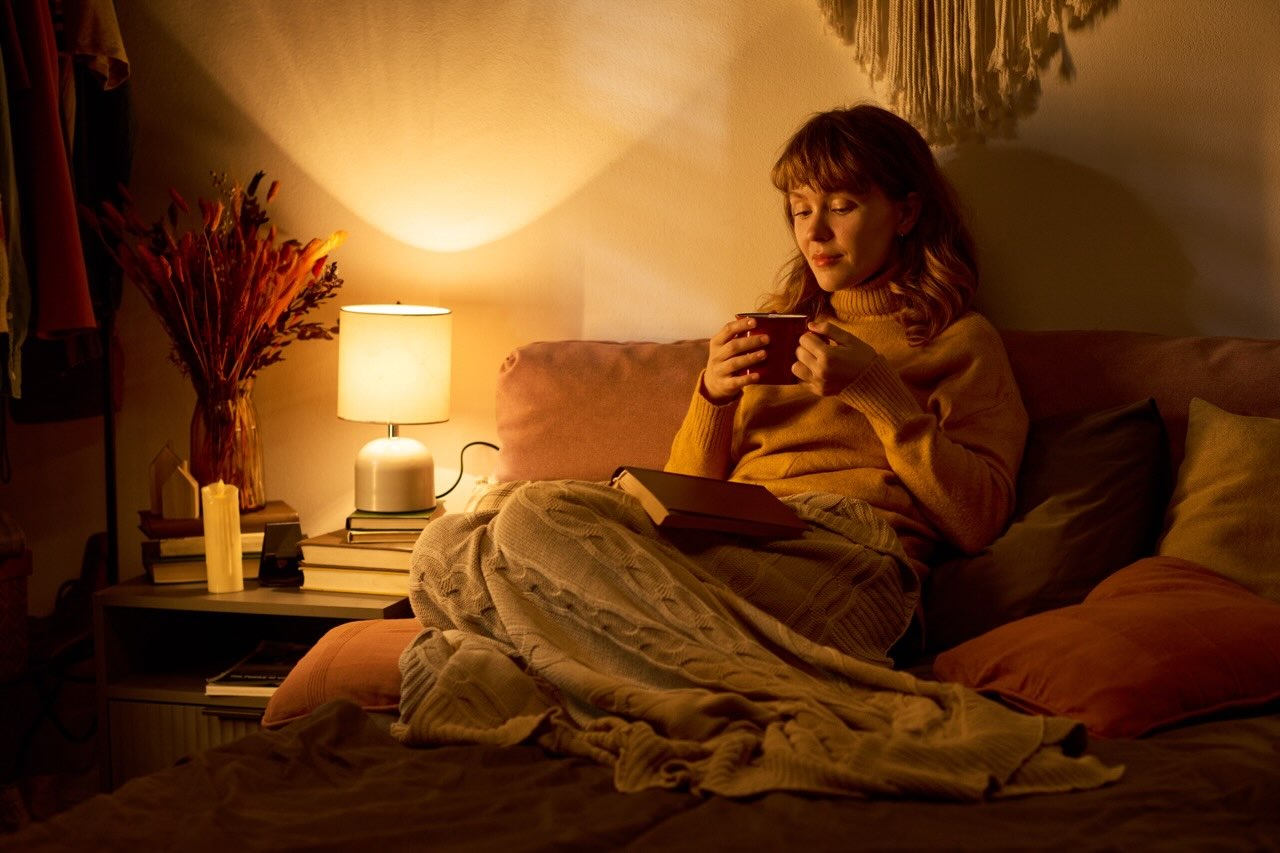
The researchers recruited people with major depressive disorder who identified as evening types. All were taking selective serotonin reuptake inhibitors and remained severely depressed. The intervention was deliberately straightforward. Each participant received four smart bulbs in small lamps, programmed to produce dimmer, warmer light in the evening. They were also encouraged to avoid bright overhead lighting and phone use close to bedtime, and to seek out more bright light during the day.
After four weeks, the intervention group had moved, on average, from severe to mild depression. The control group later received the same intervention and showed similar improvement.
The results could be enormously important, but this was a small study and, when we spoke, it was still under review. A larger trial will need to reproduce the findings before clinicians can draw firm conclusions. Nor should anyone replace prescribed treatment with a change in lighting without first speaking to a healthcare professional.
What the study does suggest is that the light around us deserves to be taken seriously as part of mental health. It is not just a matter of aesthetics or the latest lifestyle trend.
Why antidepressants may make light patterns more important
Cain's earlier experimental work adds another piece to the picture. In a controlled study involving healthy participants, the antidepressant citalopram increased every participant's circadian response to evening light compared with a placebo.
One possible interpretation is that selective serotonin reuptake inhibitors increase the influence of light on the circadian system, as well as on other areas of the brain that receive light information. Whether that helps or disrupts may depend partly on the person's surroundings. Greater sensitivity could increase the benefit of bright days, but it could also increase the effect of bright nights.
This is not an argument for anyone to change their medication. Instead, it points to something practical that can easily be overlooked: the light around a person may matter to their treatment too. Medication does not operate separately from sleep, daily routines or the physical environment.
Morning light matters, but it is not the whole story
Morning light has attracted a lot of interest, and for good reason. For many people, it helps align the internal clock with the outside world. If someone's natural circadian cycle runs slightly longer than 24 hours, early light can move the clock earlier and help keep it on a steadier schedule.
Cain is wary, however, of turning morning light into an inflexible rule. Circadian timing varies from person to person, and we do not all respond in exactly the same way. More importantly, if you miss sunrise, you have not missed your chance. Bright outdoor light throughout the day can still help strengthen circadian amplitude.
This is an important distinction. Going outside briefly at dawn and then spending eight hours in a dim office may not give the body a strong enough daytime signal. The aim is not to tick off a fashionable morning ritual. It is to rebuild the contrast between day and night.

Even on an overcast day, outdoor light is usually far brighter than indoor lighting. Stepping outside regularly, working near daylight and taking a walk at lunchtime can all add to the morning exposure.
The problem with modern lighting
Efficient LED lighting has brought real environmental benefits. But a light can be energy-efficient without being well suited to our biology. Many homes and workplaces are filled with bright, blue-enriched white light from morning until bedtime.
In a Melbourne study described by Cain, the evening light people typically received at home suppressed melatonin by about half. This doesn't mean all LEDs are harmful. Warmer, dimmable LEDs can give us efficient lighting with less circadian disruption at night. The problem is using the same bright, cool light at 10 pm that may be useful at 10 am.
Screens are part of the story, but it is too easy to blame phones for everything. The content we consume, mental stimulation, lost sleep and social pressures can all affect mental health, particularly among young people. Light sits alongside those factors. A bright overhead room light may sometimes deliver more light to the eyes than a small screen.
Designing for mental health
As the evidence grows, light needs to become a public-health and design issue.
Homes, schools, offices, hospitals and care settings are usually designed around visual comfort and energy use. The biological timing of light rarely gets much attention. Yet lighting that changes over the course of the day (brighter and richer during daylight hours, warmer and dimmer in the evening) could support sleep and mental wellbeing without asking people to think about it constantly.
Cain's work also shows why measurement matters. His company, Circadian Health Innovations, developed the MiEye wearable sensor to record the spectrum of light reaching a person, including the wavelengths that affect melanopsin. It can expose the difference between the light we think we are getting and what actually reaches our eyes.
Most of us have almost no feel for light exposure as a health behaviour. We know whether we exercised and roughly what we ate. Very few of us can tell whether our day was biologically bright enough, or whether our evening was genuinely dark.
A simple principle for everyday life
The science is complex and individual needs vary. The everyday principle is much simpler: make days brighter and nights darker.
In practice, that might mean:
getting outdoors during daylight, not just at sunrise;
breaking up long stretches in dim indoor spaces;
making use of daylight while working, where possible;
dimming lights in the hours before bed;
choosing warmer lamps in the evening and avoiding bright overhead lighting;
keeping the bedroom as dark as is practical; and
seeking professional advice for persistent sleep problems or symptoms of depression.
None of this is a cure for depression, and light should never be presented as a replacement for proper mental healthcare. But it should not be dismissed as background scenery either.
Light is a biological signal. It reaches deep into the systems that govern sleep, mood and health. For thousands of years, bright days and dark nights were simply part of being human. Bringing some of that contrast back into modern life may be one of the simplest ways to create environments that work with our biology, rather than against it.
The full conversation is on the Sunlight Matters podcast.
Compartilhar este artigo:

SAIBA MAIS
Visões esclarecedoras


Como visto em