Teilen:

We live in an age of data obsession. Every calorie, every step, every UV index is measured, tracked, and categorized. But sometimes, this laser focus on specific numbers can obscure the bigger picture – especially when it comes to sunlight and health.
Scientific inquiry thrives on careful measurement and skepticism. Yet the health impact of sunlight can’t be reduced to vitamin D levels or skin cancer risk alone. A growing body of research suggests the benefits of sun exposure are broader, deeper, and more complex than we've been led to believe.
From Heliotherapy to Fear of the Sun
Just a century ago, sunlight was prescribed as medicine. Sanatoria embraced “heliotherapy” for tuberculosis and other chronic conditions. Today, the pendulum has swung hard in the opposite direction. Public health guidelines now emphasize sun avoidance, driven by dermatological concerns over UV-induced skin cancers.
This approach, however well-intentioned, considers only part of the equation. While UV radiation is indeed a skin carcinogen, studies from Sweden and the UK reveal a surprising fact: more sunlight exposure is linked with lower all-cause mortality, particularly due to cardiovascular disease – despite a rise in skin cancer incidence [1][2].

Vitamin D: The Misleading Hero
Vitamin D has become the poster child for sunlight’s benefits. It is true that our skin produces it in response to UVB rays, and low levels are associated with numerous diseases. But here’s the catch: randomized trials of oral vitamin D supplementation consistently fail to show benefit for cardiovascular disease, hypertension, or type 2 diabetes [3][4].
The most likely explanation? Vitamin D is a marker for sun exposure, not the whole mechanism. Or, as Weller puts it: “Correlation is not causation – unless you have rickets” [5].
The Other Molecule: Nitric Oxide and Heart Health
Recent research reveals another player: nitric oxide, stored in the skin and released into circulation under UVA exposure. This photochemical reaction lowers blood pressure – a leading risk factor for global mortality – independently of vitamin D or temperature [6].
This mechanism explains long-observed patterns: higher blood pressure at higher latitudes and during winter months, when sunlight is scarce [7]. It also explains why oral vitamin D does nothing for blood pressure, but sunlight does.

Evolution Painted in Light
Why did pale skin evolve in populations at high latitudes? To increase UV absorption. This adaptation didn’t happen during 40,000 years of foraging, but only after humans transitioned to farming – and lost dietary diversity and mobility. This suggests a deep evolutionary dependence on sunlight for survival, even beyond vitamin D synthesis [8].
More Than Molecules: The Subtle Benefits of Sunlight
Sunlight affects inflammation, immune modulation, neurotransmitters, and even childhood cognitive development. Seasonal changes in gene expression influence everything from infection risk to metabolic health [9]. Children who spend more time outdoors have lower rates of myopia – a finding strong enough that ophthalmological societies now recommend minimum outdoor exposure [10].
These outcomes can’t be explained by isolated biochemical markers. They emerge from sunlight as a full-spectrum environmental input, shaping our biology in ways we’re only beginning to understand.
Let Tools Show the Whole Picture
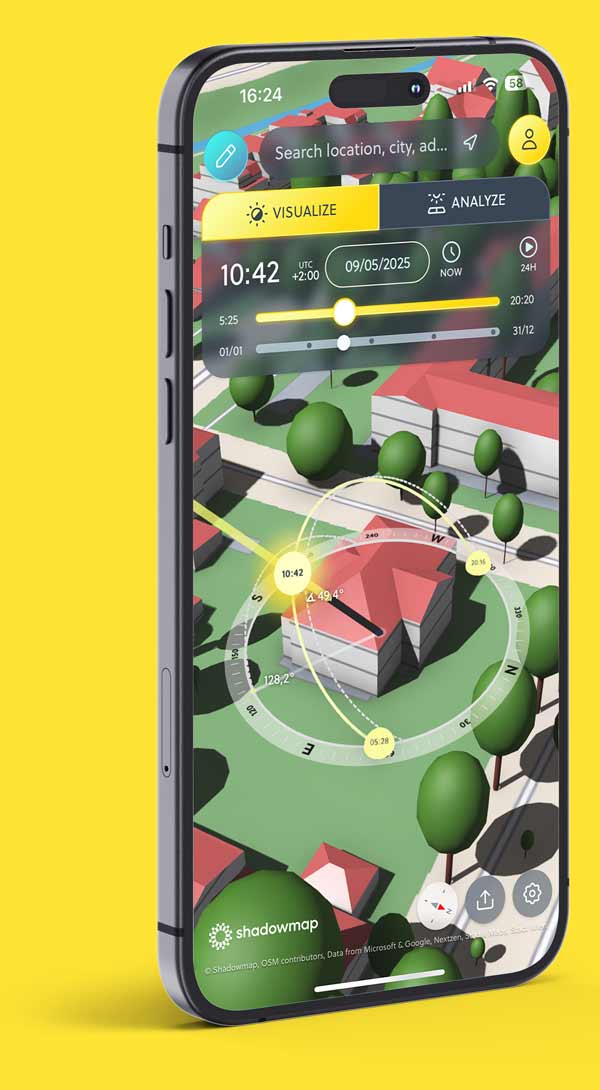
This is where tools like Shadowmap come in. Instead of reducing sunlight to a binary good or bad, Shadowmap helps people see it in context: time, place, season, geography. It empowers users to understand their light environment not just for safety, but for health, performance, and alignment with human biology.

Conclusion: Time to Step into the Light
Sunlight is not just a risk factor – it’s a vital part of human life. Over-focusing on skin cancer risk or vitamin D levels misses the broader truth: sunlight is necessary for our health in complex, measurable, and still-mysterious ways. It's time we looked at the whole picture – not just the pixel.
Let’s stop analyzing the sun to death. Let’s learn to live with it again – wisely, openly, and fully illuminated.
Sources
Lindqvist, P.G. et al. (2014). Sun exposure and all-cause mortality: Melanoma in Southern Sweden study. [PDF, p. 1726]
Stevenson, A.C. et al. (2023). Higher ultraviolet light exposure is associated with lower mortality. [PDF, p. 1726]
Manson, J.E. et al. (2020). VITAL Study: No reduction in cancer or cardiovascular disease from vitamin D supplementation. [PDF, p. 1726]
Scragg, R. et al. (2017). ViDA Study: Null findings on vitamin D and cardiovascular health. [PDF, p. 1726]
Weller, R.B. (2024). “Correlation is not causation (unless you have rickets).” [PDF, p. 1726]
Liu, D. et al. (2014). UV exposure reduces blood pressure via nitric oxide. [PDF, p. 1727]
Kollias, A. et al. (2019). Seasonal variation in blood pressure. [PDF, p. 1727]
Jablonski, N.G. (2021). Evolution of skin color and sunlight adaptation. [PDF, p. 1725]
Dopico, X.C. et al. (2015). Seasonal gene expression and inflammation. [PDF, p. 1727]
He, M. et al. (2015). Outdoor time and myopia prevention in children. [PDF, p. 1728]
Diesen Artikel teilen:

MEHR ERFAHREN
Erhellende Einblicke




BEKANNT AUS