Compartir:

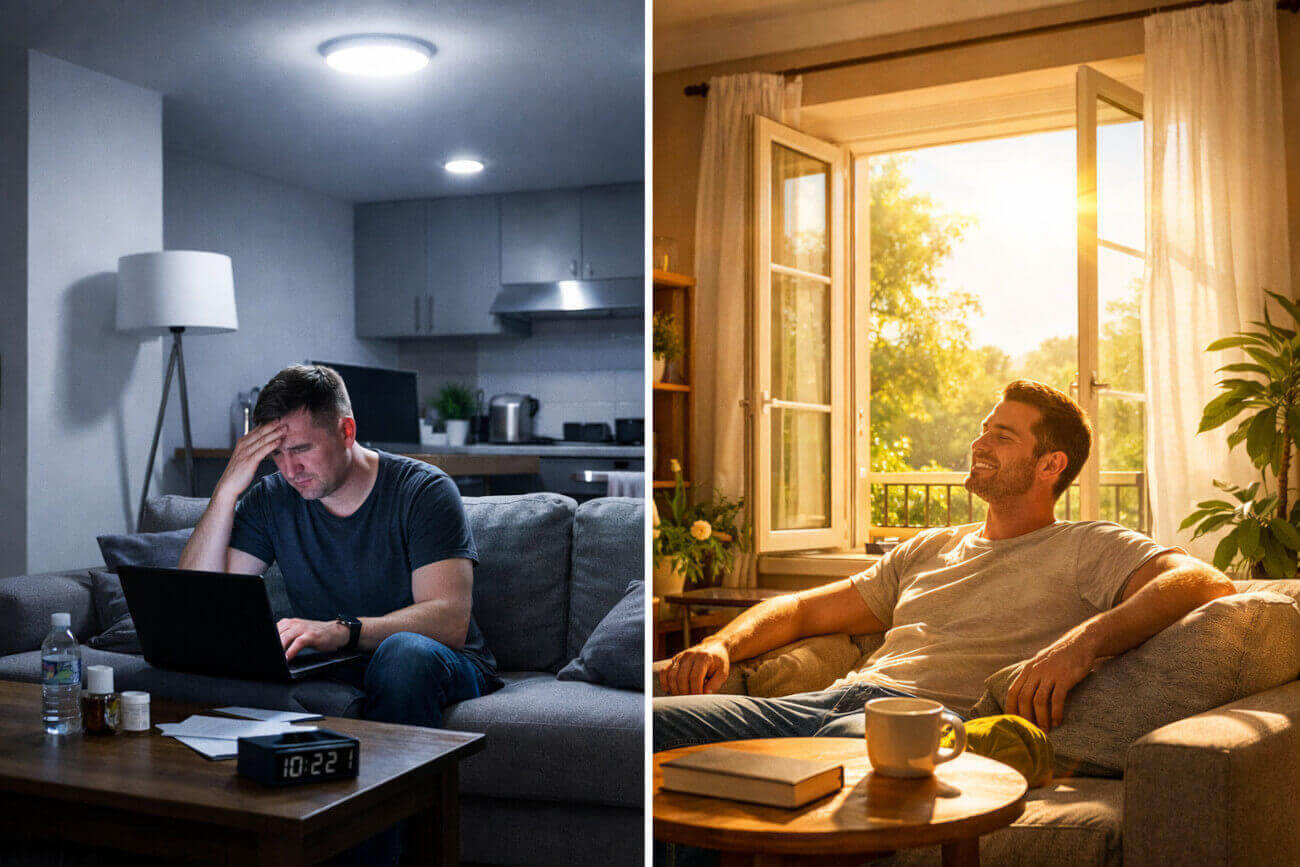
In a world dominated by energy-efficient LEDs, many health-conscious individuals are turning back to incandescent light bulbs for their potential benefits on well-being.
Unlike LEDs, which emit a narrow spectrum (typically 350-650nm) heavy in blue light, incandescent bulbs provide a broader spectrum (400-1500nm+), rich in red and infrared wavelengths that mimic natural daylight.
This full-spectrum light supports mitochondrial function, which regulates metabolism, aging, and even blood sugar levels. Recent research, including a 2026 study from University College London (UCL) published in Nature's Scientific Reports, shows that LEDs can undermine human visual performance, such as color contrast sensitivity, unless supplemented with wider spectra like those from incandescent bulbs.
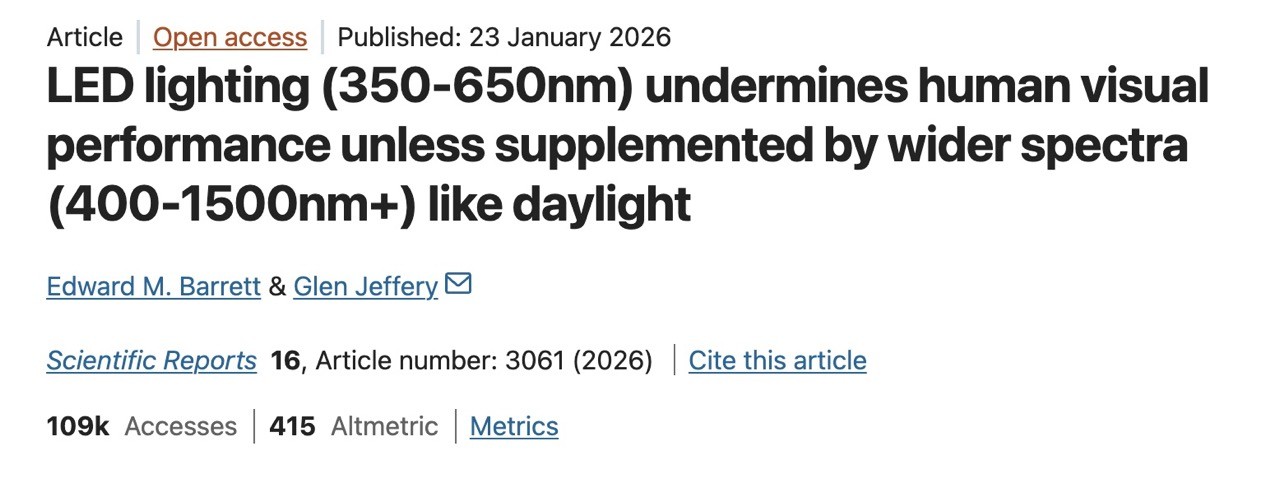
While incandescent bulbs have been phased out in many regions (e.g., banned for general use in the US since 2023 and restricted in the UK/EU), exemptions exist for specialty types like rough-service, appliance, or vintage Edison-style bulbs. These remain available online and can be a game-changer for indoor lighting, especially in evenings when blue light from LEDs disrupts circadian rhythms.
If you're searching for the “best incandescent bulbs” to boost health, this guide covers why they matter, key factors to consider, top recommendations, and practical tips.
Why Choose Incandescent Bulbs for Health?
Life evolved under broad-spectrum sunlight (300-2500nm), but modern LEDs lack longer wavelengths like near-infrared (NIR, 700-1500nm+), which penetrate deeply into the body—up to 5cm or more—and influence physiology.
Experts like UCL's Glen Jeffery highlight how LEDs suppress mitochondrial respiration, leading to issues like reduced color vision, higher blood sugars, and even shorter lifespans in animal models. In a UCL study involving office workers under harsh LED lighting (1000lx, 4000K), participants showed significant declines in color contrast sensitivity.
However, supplementing with incandescent desk lamps (providing 400-1500nm+ spectra) improved this metric by up to 20%, with effects lasting 2 months after removal.
Astrophysicist Bob Fosbury emphasizes that biology is driven by bioenergetics: sunlight (and incandescent mimics) powers metabolism like "photosynthesis in reverse," generating ATP for energy.

Without NIR, which makes up 54% of daylight, cells struggle—correlating with rising metabolic diseases since LED adoption 15-20 years ago.
Sleep, circadian and light researcher Nicholas Witton notes we now spend 90-93% of our time indoors under narrow-band blue-dominant LEDs, starving us of NIR that regulates hormones, mood, and performance.
Key health perks of incandescent bulbs include:
Circadian support and better sleep: Warm tones (2700K or lower) minimize blue light, preserving melatonin. LEDs suppress it, potentially leading to poor sleep and fatigue.
Reduced eye strain and improved vision: Flicker-free with high CRI (nearly 100), they enhance color rendering and contrast. The UCL study found LEDs impair color vision in windowless environments, but incandescent supplementation reverses this.
Mitochondrial boost and metabolic health: NIR increases ATP production, oxygen consumption, and lifespan in models (e.g., fruit flies live 10-180% longer with 670nm exposure). Human trials show 27% lower blood sugar spikes after NIR exposure.
Overall wellness: Lowers inflammation, supports mobility, and probably counters modern issues like myopia and diabetes, which have surged with indoor living.
These benefits are especially vital for aging eyes, offices, or homes with limited daylight. However, incandescents use more energy and generate heat, so use them strategically for evenings or targeted health support.
Key Factors to Consider When Buying the Best Incandescent Bulbs
To optimize for health, focus on bulbs that deliver NIR-rich spectra. From experts like Jeffery and Witton, aim for those mimicking sunlight's balance:
Color temperature: 2700K or warmer (amber/soft white) for NIR emphasis and circadian-friendly evenings. Avoid >3000K.
Wattage and brightness: 25-60W for cozy, health-focused lighting; dimmable for control. Lower wattage boosts NIR relative to visible light. Jeffery suggests an interesting hack - buy a 100W bulb and a dimmer and use it on a low dim setting. The incandescent bulb will last a long time
Base type: E26/E27 (medium) for standard fixtures.
Spectrum and exemptions: Seek "rough-service," "appliance," or "vintage Edison" to bypass bans—these retain full 400-1500nm+ spectra.
Dimmable: Crucial for evenings; dimming preserves NIR while reducing visible light, as per Fosbury's bioenergetics insights.
NIR penetrates clothing and scatters in the body (10% measurable through the torso), so even indirect exposure helps. For best results, combine with daylight—e.g., 15-20 minutes outdoors boosts ATP.
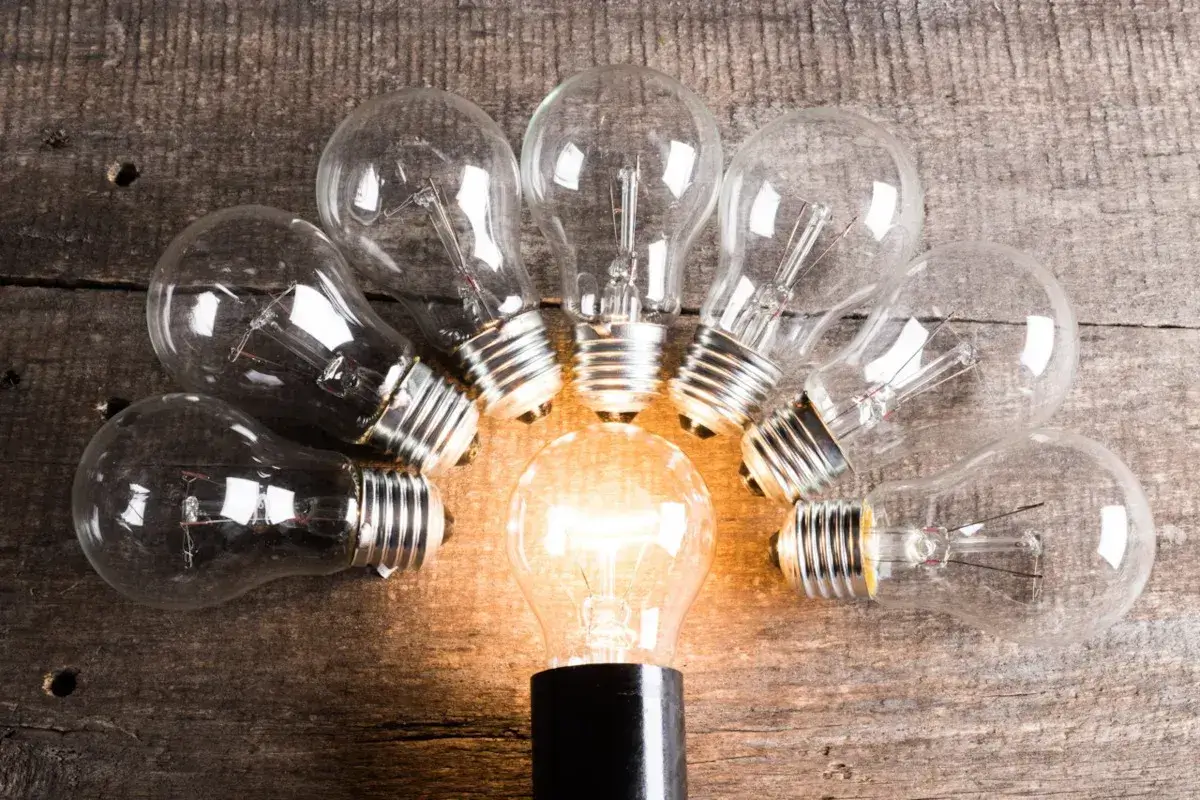
Top Recommendations for the Best Incandescent Bulbs (2026)
Based on real-world availability and the goal of maximizing a continuous, longer-wavelength–rich spectrum indoors, here are the most reliable categories to look for:
Rough-Service / Vibration-Service Incandescent (A19/A21, ~40–100W, dimmable)
These are often sold for garages, workshops, and utility areas and may be easier to find because they’re marketed for durability and specialty use. Look for packaging that explicitly says “incandescent” or “tungsten filament.”
Rough-service light bulbs are specialized, heavy-duty incandescent lamps designed with reinforced filaments and stronger construction to withstand high vibration, mechanical shock, and rough handling. Ideal for construction sites, machinery, and garages, they feature extra support wires, longer lifespans, and sometimes silicone coatings to prevent shattering.
Best for: Home offices, windowless rooms, daytime supplementation, and lamps on dimmers.Appliance / Oven Incandescent Bulbs (typically ~25–40W, very warm, often clear glass)
Appliance bulbs (oven, fridge, range hood, sewing machine, etc.) are commonly available and tend to be very warm and simple (no electronics driver). They’re usually lower-wattage, so they work well for evening lighting and bedside lamps.
Best for: Bedrooms, hallways, and “after-sunset” lighting.Decorative “Vintage Edison” Tungsten Incandescent (NOT LED filament), ~25–60W, warm/amber
If you like the cozy aesthetic, these can be a good option — but this category is where LED lookalikes are most common. Verify it’s incandescent by checking specs/labeling and by the heat output once in use (incandescents run hot).
Best for: Living rooms, dining areas, ambient evening lighting.Chromalux / Neodymium-Glass “Full Spectrum” Incandescent (specialty option)
Chromalux-type incandescents use neodymium glass to reduce some “yellow” wavelengths and shift perceived color/contrast. This can be pleasant for some people, but it’s better to frame it as a color-rendering preference bulb rather than making strong medical claims about “deep penetration” or guaranteed metabolic effects. (Lumiram)
Best for: Reading areas, desks, spaces where you want crisper perceived colors.
One non-negotiable buying tip:
Many modern bulbs are designed to look incandescent. So always verify the packaging/specs explicitly say incandescent / tungsten / halogen (halogen is still incandescent tech).
Practical Tips for Using Incandescent Bulbs Healthily
Timing: Use after sunset; start with 15-20 minutes for NIR benefits (e.g., blood sugar regulation, per Jeffery).
Integration: Supplement LEDs during day; switch to incandescents at night. In LED-heavy offices (like UCL's study site), add desk lamps for vision gains.
Safety: Manage heat—avoid enclosed fixtures. NIR works through clothes, so no need for direct skin exposure.
Sourcing: Search "rough service incandescent bulbs" or "vintage incandescent bulbs for health" online. In the UK/US, oven/appliance bulbs (40W) are NIR-rich alternatives.
Alternatives if banned: High-CRI warm LEDs (2700K, good reds) as backups, but prioritize incandescents for true NIR. For outdoors: Sit under trees for max NIR (leaves reflect it).
Measure impact: Track sleep, energy, or vision (e.g., color tests) pre/post-switch. Witton suggests morning exposure for peak effects.
Reverting to incandescent bulbs for health can nurture a more natural indoor environment, countering LED pitfalls. As Fosbury warns, LEDs' narrow spectra may contribute to modern health crises—supplementing with broader light could be key.
If you're ready to try the “best incandescent bulbs, start with a dimmable vintage pack and feel the difference!
One word of caution - make sure the bulb you find is truly incandescent. Many modern LED bulbs have been designed to look like them.
Quick Links for Incandescent Lightbulbs:
UK
https://www.bltdirect.com/incandescent-light-bulbs
https://www.amazon.co.uk/Incandescent-Bulbs/b?ie=UTF8&node=248792031
https://www.lightbulbs-direct.com/light-bulbs/incandescent/
https://www.ebay.co.uk/b/bn_3249453
https://www.lampwise.co.uk/light-bulbs/incandescent
https://www.etsy.com/market/incandescent_light_bulb
US
https://daylightcomputer.com/labs
https://www.bulbamerica.com/pages/incandescent-bulbs
https://healthlighting.com/collections/incandescent-light-bulbs
https://www.bulbs.com/Incandescent_Bulbs
DACH
https://www.amazon.de/-/en/gp/bestsellers/lighting/248431031
Compartir este artículo:

MÁS INFORMACIÓN
Ideas iluminadoras



Consulta también