Partager:

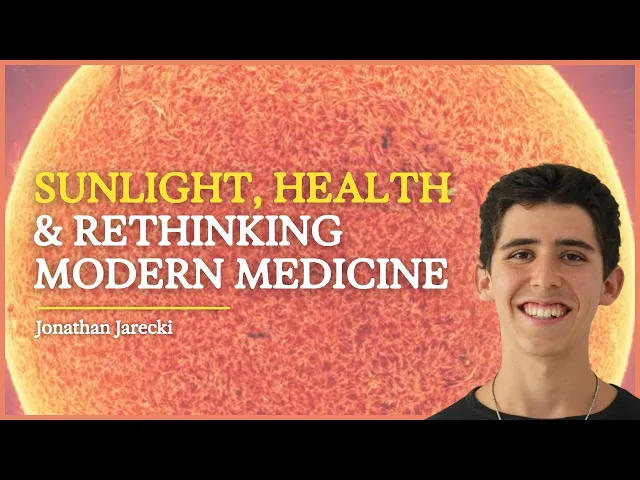
There is a certain irony in studying to become a doctor while believing, deeply, that modern medicine is missing something fundamental. Jonathan Jarecki — 20 years old, pre-med at Davidson College in North Carolina, biology major with a neuroscience minor — lives inside that irony every day. He sits in lecture halls lit by cold fluorescent tubes, learning pathways and pharmacology, and he thinks: this room itself might be making us sick.
That suspicion is not a hunch. It is the conclusion Jonathan has reached after three years of reading peer-reviewed literature, diving into biophysics, and working backwards through an education that began not in a university but in a household that treated food, sleep, and nature as medicine long before wellness became an industry.
"We evolved under full-spectrum natural daylight. We didn't evolve with the artificial light we are now exposed to. Just from that perspective alone, you should start thinking: there are probably negative biological consequences to the indoor lifestyle we're living."
— Jonathan Jarecki
Our Sunlight Matters podcast with Jonathan is also available on Spotify, Apple Podcasts and Buzzsprout. You can find Jonathan's podcast The Signal here.
A Family That Refused the Default
Jonathan’s story begins, as most of the best health stories do, with a mother who paid attention. Raised alongside three older siblings in a home where diet and lifestyle interventions were standard practice, Jonathan credits everything to her early influence after consulting health and wellness practitioner John Galamaga who has more than 40 years of experience.
When Jonathan's grandmother was given nine months to live with congenital heart failure, the practitioner put her on a comprehensive lifestyle programme. She lived nine more years. When Jonathan's father was taking high doses of Dilantin, a powerful epilepsy medication, and struggling with his weight, the same approach helped him come off the drug entirely, seizure-free, and lose sixty pounds in a matter of months. These were not statistical abstractions. They were family members. The evidence arrived before he ever opened a textbook.
"My mom saw both of these incredible transformations," Jonathan explains, "and she thought: there's no brainer here. I'm going to listen to whatever John tells me, and I'm going to raise my children that way."
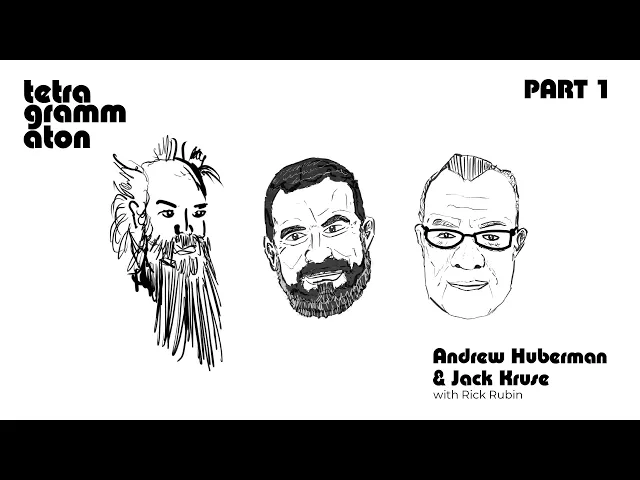
Still, growing up, the focus was primarily on food and exercise, the pillars that most health-conscious families emphasise. Light was not part of the conversation. That chapter came later, when a seven-hour podcast between Dr. Jack Kruse and Andrew Huberman stopped Jonathan in his tracks.
The Light Story Nobody Was Telling
"After listening to that podcast, I was completely blown away," he says. "The light story was not something I was totally keen on understanding. And I think that's a lot of people's experience — you come into health and wellness thinking it's about diet and exercise, and once you have those in check, you're good." What Jonathan discovered was that an entire dimension of human biology had been hidden in plain sight. Or rather, hidden by our absence from plain sight altogether.
The insight sounds almost embarrassingly obvious once stated: we are organisms that evolved over hundreds of thousands of years under the full spectrum of natural sunlight. Every cell, every biochemical process, every rhythm of sleep and wakefulness developed in relationship with the sun. And then, in the blink of an evolutionary eye, we moved inside.
THE SCALE OF THE PROBLEM
Chronic disease — cancer, diabetes, cardiovascular disease, metabolic disorders — now affects the majority of adults in both the UK and the US. Jonathan argues that while no single cause can explain this epidemic, the abandonment of natural light environments is a significantly underappreciated contributor. We have created an indoor civilisation and then wondered why our biology is struggling.
"Chronic disease is huge in our society," Jonathan says. "And there are easy interventions, preventable measures, that we can use. Light is not the only thing, but it is a huge one. And so few people are talking about it."
The Little Engines Inside Us All
To understand why light matters so profoundly, Jonathan walks through the science of mitochondria with the fluency of someone who has fallen genuinely in love with a subject. And it is impossible, listening to him, not to catch some of that fascination.

Mitochondria are the organelles within our cells responsible for producing ATP, adenosine triphosphate, the energy currency that powers every function in the body. There may be hundreds of thousands of them within a single cell. They communicate with one another, form networks, and operate at an energy density that staggers the imagination: the charge difference across the inner mitochondrial membrane, relative to its tiny size, is equivalent in magnitude to a lightning bolt.
The key mechanism is the electron transport chain. Food is broken down into electrons; those electrons are passed along the chain, creating a charge gradient that drives a nano-scale motor to spin and produce ATP. Oxygen, drawn in with every breath, picks up the spent electrons at the end of the chain and converts them into water.
What makes this relevant to light is a protein called cytochrome C oxidase — the fourth complex in this chain. It is a chromophore: it absorbs light. Specifically, it absorbs red and near-infrared wavelengths. When it does, it releases nitric oxide, enhances the flow of electrons through the chain, and dramatically accelerates ATP production. The cell, charged up, functions better. The mitochondria spin faster. The body, quite literally, runs on sunlight.
"The charge difference in our mitochondria, relative to how small they are, is the same magnitude as a lightning bolt. We have tens of thousands of them in a single cell, and billions of cells in our body. It's an incredible flow of energy running through us constantly."
— Jonathan Jarecki
Near-infrared light makes up approximately 50% of the solar spectrum. It is invisible to the human eye, yet it penetrates the human body, measurably, passing through skin, tissue, and even skull. Research by Scott Zimmerman and Russell Reiter has shown that infrared light funnels into the deep crevices of the brain and interacts with brain cells directly, producing subcellular melatonin, the body's most powerful antioxidant and supercharging the mitochondria responsible for neuronal function.
"If you have impaired mitochondria," Jonathan explains, "your neurons function at an impaired level." The implications stretch across every domain of health: energy, cognition, mood, immune function, metabolic regulation. Mitochondrial health, he argues, is not one factor among many, it is the foundation on which all the others rest.
Ancient Origins: The Photosynthesising Bacteria Within Us
Perhaps the most striking piece of the story Jonathan tells is evolutionary. The endosymbiotic theory. This is mainstream science, not fringe speculation. It holds that mitochondria were originally free-living bacteria that were engulfed by our cellular ancestors billions of years ago. They still bear the hallmarks of that independent existence: their own membrane, their own DNA, their own separate replication cycle.
But here is what stops Jonathan in his tracks: those ancestral bacteria were photosynthetic. They used sunlight to produce ATP. Our mitochondria, descendants of sun-harvesting microbes, may still carry that ancient relationship with light encoded in their very structure.
"The ancestry of our mitochondria used sunlight to produce ATP," he says quietly. "So clearly, there are origins that stem back there as well."
Researcher Arturo Herrera has proposed that melanin, the pigment present throughout the human body, may absorb sunlight and, in the presence of water, split water molecules in a process analogous to photosynthesis, releasing electrons that can be used to produce ATP. The evidence is preliminary. More research is urgently needed. But the question it raises is profound: are we, in some meaningful sense, solar powered?
GERALD POLLOCK & EZ WATER
Jonathan also draws on the work of Dr. Gerald Pollock of the University of Washington, who has identified a fourth phase of water — structured, gel-like, negatively charged — that forms at biological interfaces and behaves like a battery. Infrared light, Pollock's lab has shown, builds this 'exclusion zone' water, potentially providing another mechanism through which sunlight directly energises human cells. Jonathan brought Pollock to speak at Davidson College last semester; eighty students and faculty attended.

The Reductionist Trap and the Lost Art of Wondering
One of the most recurring themes in Jonathan's thinking is the danger of reductionism in science. This is the practice of isolating variables to understand mechanisms, but losing sight of the whole system in the process.
His example is UV light and cancer. Studies showing that isolated UV radiation causes cancerous changes in cell cultures have been extrapolated, bluntly, into public health advice: avoid the sun, it causes cancer. But full-spectrum sunlight is not isolated UV radiation. It is a complex, tightly interwoven spectrum — UV, visible, near-infrared, far-infrared — that arrives as a package our biology evolved to receive in full.
"Clearly it's way more nuanced than that," Jonathan says, "but that is how our reductionist mindset has made people believe." The same logic has fractured our understanding of the body itself — treating the heart, liver, gut, and brain as independent units rather than nodes in an interconnected energy system.
He is drawn to traditional Chinese medicine for exactly this reason: acupuncture meridians, once dismissed as mysticism, now have peer-reviewed structural correlates in Western research. He approaches all knowledge — including the science he champions — with what he calls a mandatory open-mindedness. He points to the replication crisis documented by journals including Nature, in which researchers repeatedly fail to reproduce each other's findings.
A Generation Waking Up
Jonathan is, unmistakably, a young person in a hurry — not out of anxiety but out of conviction. He runs a social media presence dedicated to light and health, approaching every critical comment with quiet persistence. He has founded a chapter of the Vital Choice Project at Davidson — a national organisation aimed at teaching pre-med students to integrate the best of allopathic and naturopathic medicine.
"Naturopathic medicine may not have all the answers, and allopathic medicine definitely doesn't have all the answers," he says. "How do we combine both to have a healthy handshake between them?" It is a question, he believes, that the doctors being trained right now are hungry to ask — if only someone gives them permission.

He also sees in his own generation a particular urgency. Generation Z is the first to grow up with the phone as a primary light source — dopamine systems shaped by scrolling, cortisol chronically elevated, sleep cycles disrupted by blue light at midnight, and sunlight exposure measurably lower than any previous cohort in history.
"I think getting sunlight and being more out in nature actually changes people's brain chemistry — to be more perceptive, more aware, more open-minded. You get more sunlight, you're more open-minded. You're more open-minded, you learn more about sunlight. It's a positive feedback loop."
— Jonathan Jarecki
The Bigger Picture
What Jonathan Jarecki represents, beyond the science itself, is a particular kind of medicine that is struggling to be born. It insists on looking at the whole organism rather than isolated pathways, on acknowledging what we do not know rather than overstating what we do, and on treating the patient's environment — including the light they receive or are denied — as a clinical variable worth measuring.
He is twenty years old. He has several years of medical school ahead of him, years in which the institutional weight of conventional training will push back against everything he has come to believe. He seems, quietly, unafraid of that.
"I've seen firsthand," he says, "that a lot of people's perspectives on things have changed just from me telling them my beliefs. People are more open-minded than we think."
For now, he plants seeds, with peers in lecture halls, with professors he respectfully challenges, with students who discover his content online and message him to say they've started going outside in the mornings. Every one of those people, he notes, might go down the same rabbit hole he did. And then they'll share what they found.
The sun has been waiting. It has been there every morning, offering something our cells have known how to use for billions of years. The question, Jonathan Jarecki has decided, is simply whether we choose to step outside and receive it.
Partager cet article:

EN SAVOIR PLUS
Des idées lumineuses



Tel que vu sur