Compartir:

In 1926 the Lancet described sunbathing as one of nature's great aids to health. By the 1950s the same rays had become, in Rowan Jacobsen's phrase, the object of a quasi-religious demonisation. Nothing about the sun changed in those thirty years. What changed was us.
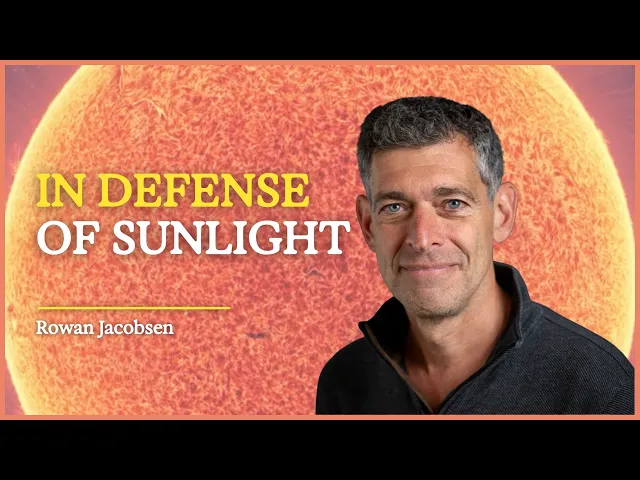
Jacobsen joined us to talk about In Defense of Sunlight: The Surprising Science of Sun Exposure, published by Simon & Schuster in June and his tenth book. His argument is not that the warnings were wrong. It is that they were incomplete, and that a century of public health messaging has left most of us with a one-sided understanding of our relationship with the nearest star.
When doctors prescribed sunshine
The fear of the sun is recent. For the late nineteenth and early twentieth centuries, sunlight was a treatment.
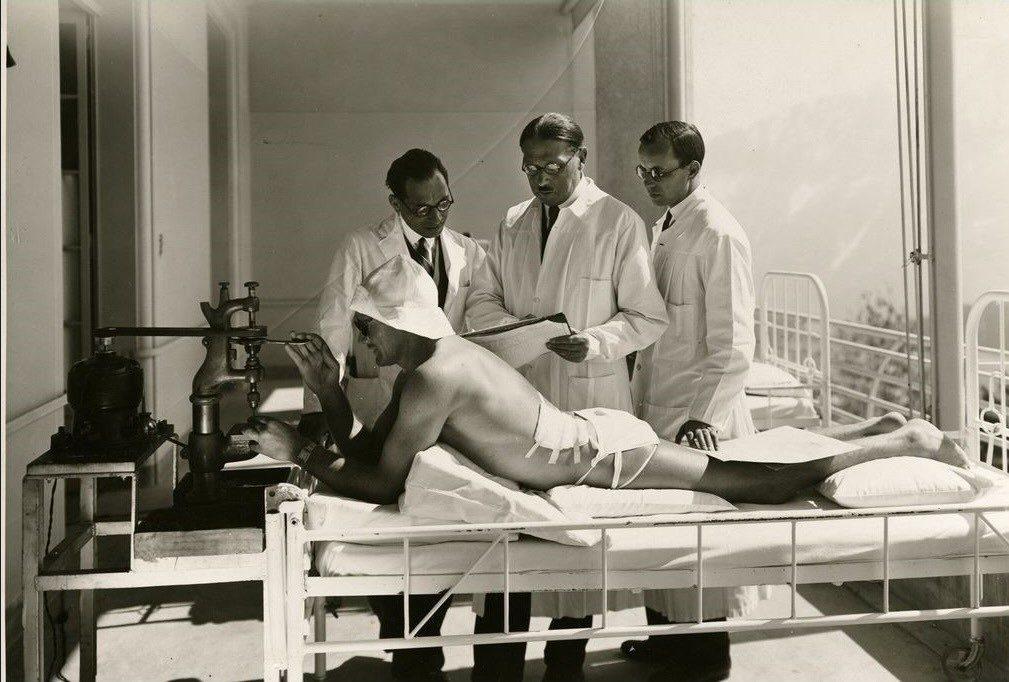
Niels Finsen won the 1903 Nobel Prize in Medicine for using concentrated light to treat lupus vulgaris, a tuberculous infection of the skin. In 1919 Kurt Huldschinsky showed that ultraviolet lamps cured rickets in children. Auguste Rollier built a network of clinics above the cloud line at Leysin in the Swiss Alps, where patients with skeletal tuberculosis were wheeled onto terraces for graduated exposure to mountain sun. Heliotherapy was mainstream medicine, and hospitals were designed around it. The long south-facing balconies on early twentieth-century sanatoria were not architectural fashion. They were the treatment.
And then it turned
Sunbathing became popular, exposure became excessive, and by the middle of the century the epidemiology had arrived. Ultraviolet radiation causes skin cancer. That finding was correct, it remains correct, and the public health campaigns that followed have probably saved some lives from excessive sun exposure. It's a very narrow perspective though focused on laboratory conditions instead of living people in sunlight.
Jacobsen's point is about what those campaigns left out. In establishing that too much sun is dangerous, they never addressed the possibility that too little might be dangerous too. The message that reached the public was simpler than the science: the sun is a hazard, and less is always better.
The deficiency nobody was looking for
Jacobsen's own route into this began with research linking sunlight exposure to lower mortality, better cognition and reduced cardiovascular disease. Following the literature outward, he found a substantial body of work suggesting that people with moderate sun exposure live longer and experience lower rates of many chronic diseases of ageing.
Which raises an uncomfortable question about how we now live. Remote work, screens for entertainment, commuting in a metal box, exercising in a gym. Jacobsen describes the result as a form of light deficiency. The precise health cost has not yet been quantified, and he is careful about that, but the direction of the evidence is sufficiently consistent to take seriously.
The wavelength nobody talks about
Almost all of the public conversation concerns ultraviolet, which is a narrow slice of what the sun delivers. Infrared is the part we have quietly removed from our lives.
The measurable change is in our lighting. An incandescent bulb radiated most of its energy as heat and near-infrared. LEDs emit effectively none. Combine that with spending the overwhelming majority of daylight hours indoors and modern humans receive a fraction of the infrared exposure our biology developed under.
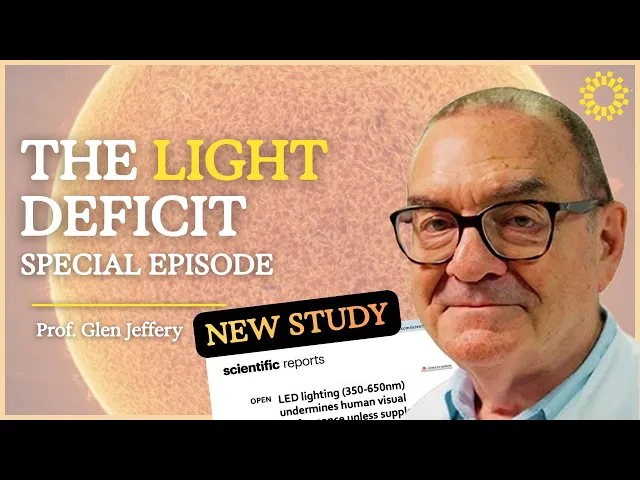
Why that might matter is the more speculative part, and worth flagging as such. Work by Glen Jeffery's group at UCL and others suggests near-infrared light interacts with mitochondria, the structures that produce energy inside our cells, not by supplying energy directly but by helping them run more efficiently. This is early research rather than settled fact. The exposure gap, though, is not in doubt, and it is easily measured.
Balance, not reversal
None of this is an argument for abandoning sun protection, and Jacobsen is explicit about it. Ultraviolet is what enables vitamin D synthesis. It also triggers the release of nitric oxide from stores in the skin, work led by Richard Weller at the University of Edinburgh, which lowers blood pressure and is involved in regulating inflammation. And ultraviolet raises the risk of skin cancer. All three statements are true at once.
The question was never whether the sun is good or bad. It is how much, of what, and when.
Lightscapes
Jacobsen's most useful idea is that light is a property of place. Every environment has its own signature, and it shifts through the day: dawn light, midday overhead sun, the filtered light under a canopy, evening twilight. Each delivers a different mix of wavelengths.
Woodland is his best example. Leaves reflect green and near-infrared while absorbing much of the rest, and there is research, including work by Rami Burstein's group at Harvard, suggesting green light can reduce migraine pain and lower anxiety. Some part of how restorative a walk among trees feels may be a straightforwardly optical phenomenon.

The argument that has caused the most trouble
The book's sharpest claim is about who current guidance serves. Blanket sun avoidance is calibrated for the populations at highest risk of skin cancer, who are also the palest. People with darker skin have markedly lower rates of skin cancer and, on the evidence Jacobsen assembles, the most to gain from exposure. Advice designed to protect one group has been issued universally to everybody.
Which makes this a measurement problem
Here is where we would add something to Jacobsen's case.
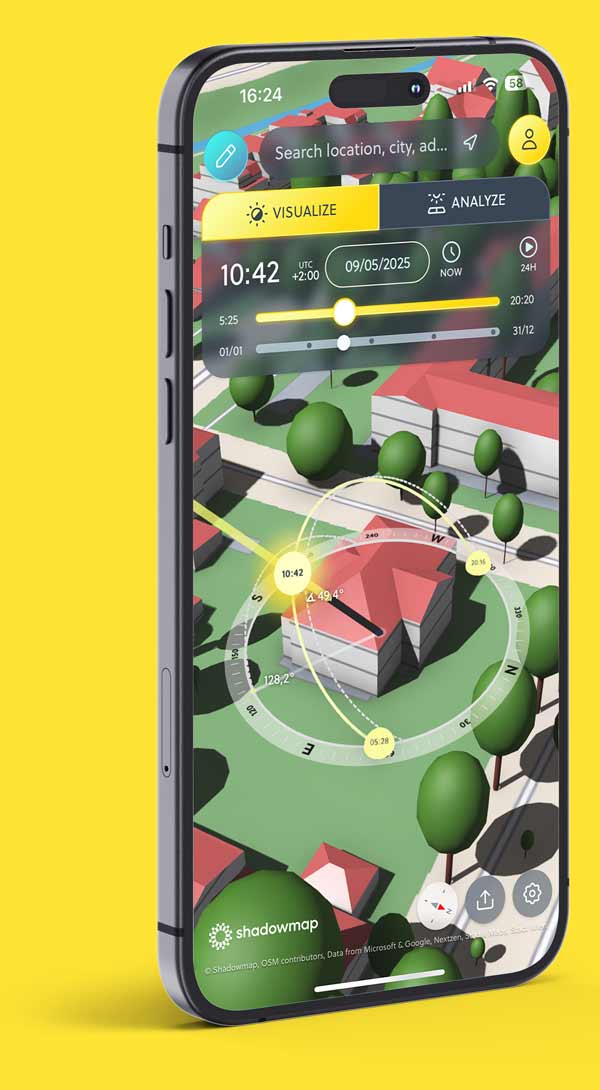
If light exposure carries the health consequences this research suggests, and if light is a property of specific places at specific times, then how much sun a particular flat, garden, balcony or street actually receives stops being a matter of taste. It becomes a health variable with a number attached, and one that varies enormously between two homes on the same road.
Almost nobody knows that number for the places they spend their lives. It is knowable. That gap is roughly the reason this company exists, and it is why we found this conversation so useful: the science is arriving at the point where somebody has to measure it.
Jacobsen's own summary of what to do about all this runs to seven words, a deliberate echo of Michael Pollan on food.
Get sun. Not too much. Go outside.
The full conversation is on the Sunlight Matters podcast.
Learn more about Rowan Jacobsen on his website.
Compartir este artículo:

MÁS INFORMACIÓN
Ideas iluminadoras


Consulta también