Share:
Vitamin D deficiency is now a global epidemic, affecting millions in both cold and hot climates. Even in cities with abundant sunshine, like Dubai or Los Angeles, people spend most of their days indoors – behind UV-blocking glass, under LED lighting, and disconnected from natural light cycles.
From a health optimization standpoint, this raises an important question:
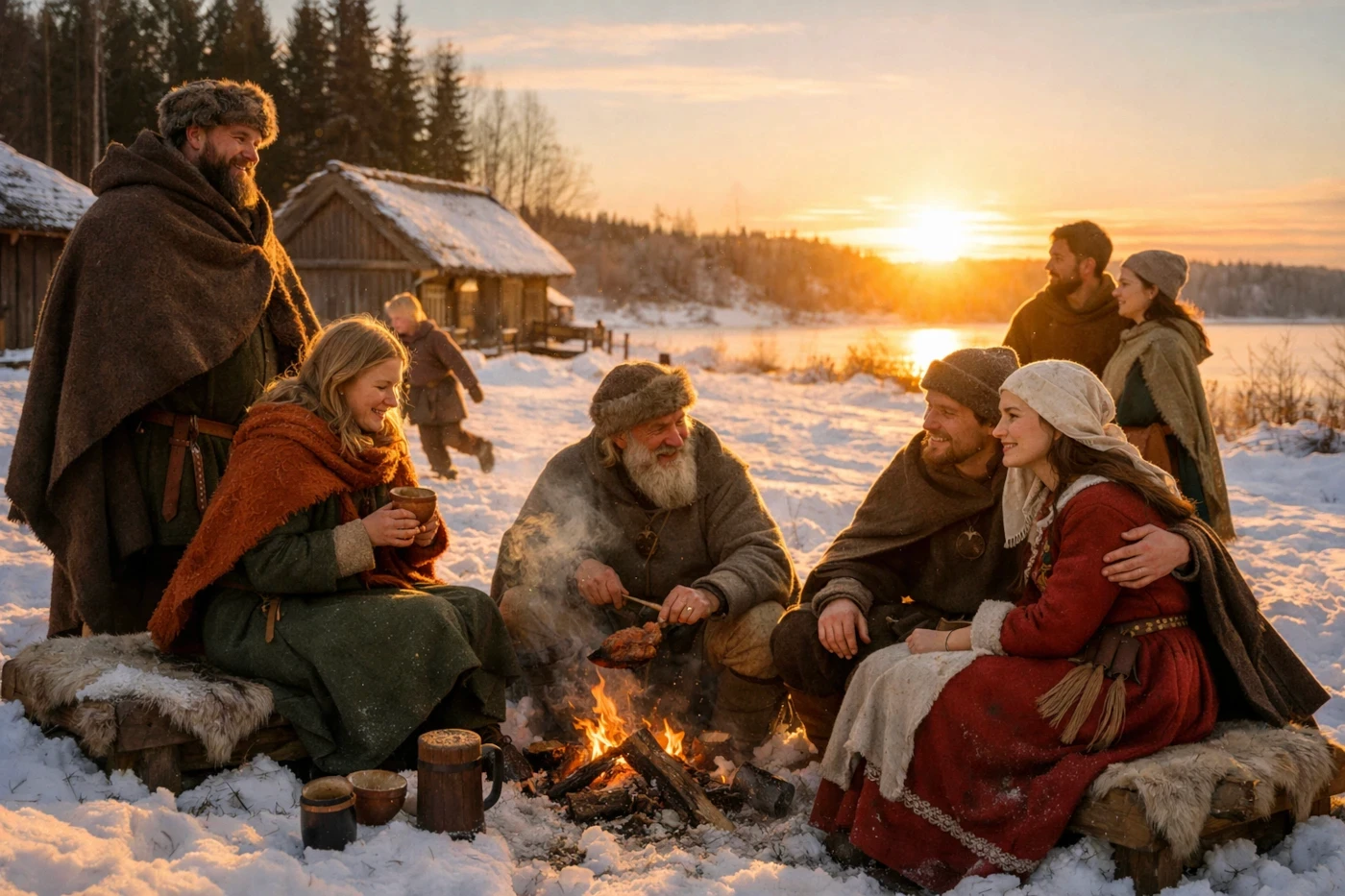
How did ancestral humans survive dark, freezing winters in places like Scandinavia, Siberia, or Alaska, where sunlight is minimal – and sometimes entirely absent?
Modern research suggests that humans evolved sophisticated biological and behavioral strategies that allowed them not just to survive, but often to thrive. At the same time, today’s “sun scare” messaging is increasingly questioned by dermatologists, sunlight researchers and biohackers.
This article uses insights from health research, evolutionary biology, archaeology, and light hygiene science to explore how our ancestors overcame winter darkness – and what modern people can learn from them to bridge the gap of this evolutionary-environmental mismatch.

Humans as Solar Organisms: Evolutionary Biology and Sunlight-Driven Health
Human physiology evolved outdoors, in full interaction with natural sunlight. UVB radiation enables vitamin D production, which functions more like a hormone than a vitamin – influencing immunity, bone formation, neuromodulation, inflammation, and metabolic health.
A major review emphasizes that vitamin D evolved as an “endogenously photosynthetically produced precursor” to a critical hormone.
From an evolutionary perspective:
Early humans spent nearly all waking hours outside
Skin pigmentation adapted to local UV levels
Seasonal light cycles shaped circadian rhythms, immunity, metabolism, and fertility
Indigenous populations still display higher vitamin D levels due to outdoor lifestyles
In scientific research around sunlight and modern biohacking communities, spending time outdoors in sunlight is now considered foundational to human health.
Ancestral Light Hygiene: Natural Strategies for Balanced Sun Exposure
Premodern humans had remarkably effective light hygiene – not by their own design, but by the nature of their lifestyles that developed in sync with the Sun. They spent hours outdoors daily, experiencing direct sunlight and natural shade. At lower sun positions diffuse UV is still available, given time is spent outdoors. Firelight was the only light source at night and did not interrupt sleep cycles while providing beneficial infrared waves. Seasonal variation and gradual skin adaptation to UV exposure went hand in hand.
Crucially, they protected their skin behaviorally, not chemically. Even with minimal clothing sunburn was naturally avoided via daily gradual sun exposure across the seasons. Clothing was chosen appropriate for climate and culture – seeking shade in hot climates was only common sense. Bedouins for example used the time before sunrise and after sunset to travel in hot deserts. Natural oils like olive oil were sometimes used as sunscreen, providing low SPF and supporting skin health, while not block UVB rays.
This aligns perfectly with modern dermatological research led by Richard Weller, showing for example that sunlight may reduce cardiovascular mortality through nitric oxide release – with many more health benefits like lowered all-cause mortality being confirmed by various research.
Modern indoor lifestyles, sunscreen overuse, and inconsistent sun exposure often disrupt this natural balance.
Seasonal Biohacking Before It Existed: Vitamin D Storage and Winter Mobilization
Humans evolved a natural summer–winter vitamin D cycle:
Summer: abundant UVB → vitamin D production → storage in body fat
Winter: reduced UVB → release of stored vitamin D
Studies show that vitamin D stored in fat tissue is biologically accessible during winter. Even more relevant for health and biohacking are the results of a recent study showing that physical activity mobilizes stored vitamin D – the VitaDEx Randomized Controlled Trial demonstrated that exercise in winter preserved active vitamin D levels, even without sunlight.
Premodern humans walked long distances daily, carried loads and performed constant manual labor with continued outdoor tasks in winter. In a world before gyms and sedentary lifestyles, nature demanded the original metabolic and vitamin D optimization protocol as humans lived in hunter-gatherer tribes and agrarian societies.

Archaeological Evidence: Pre-Industrial Humans Had Stronger Vitamin D Status
New archaeological techniques reveal surprising patterns. Historical populations, including medieval northern Europeans, often had equal or higher vitamin D levels compared to modern residents.
A keratin-based analysis of pre-industrial Scottish hair samples found significant vitamin D presence despite low UV environments.
This evidence strongly suggests vitamin D deficiency is a modern lifestyle disorder, not a geographical inevitability.
Winter Sunlight Isn’t Zero: Diffuse UVB, Snow Reflection, and Scattered Light
Even during low solar angles, humans still receive meaningful UV exposure.
Key findings from UV science:
Diffuse UVB from atmospheric scattering can remain biologically useful
Shade can deliver 50–55% of vitamin D-effective UV under certain conditions
Snow has extremely high albedo, reflecting UV upward and amplifying exposure
Field studies at latitudes 61°–67°N found measurable increases in vitamin D from minimal winter sunlight
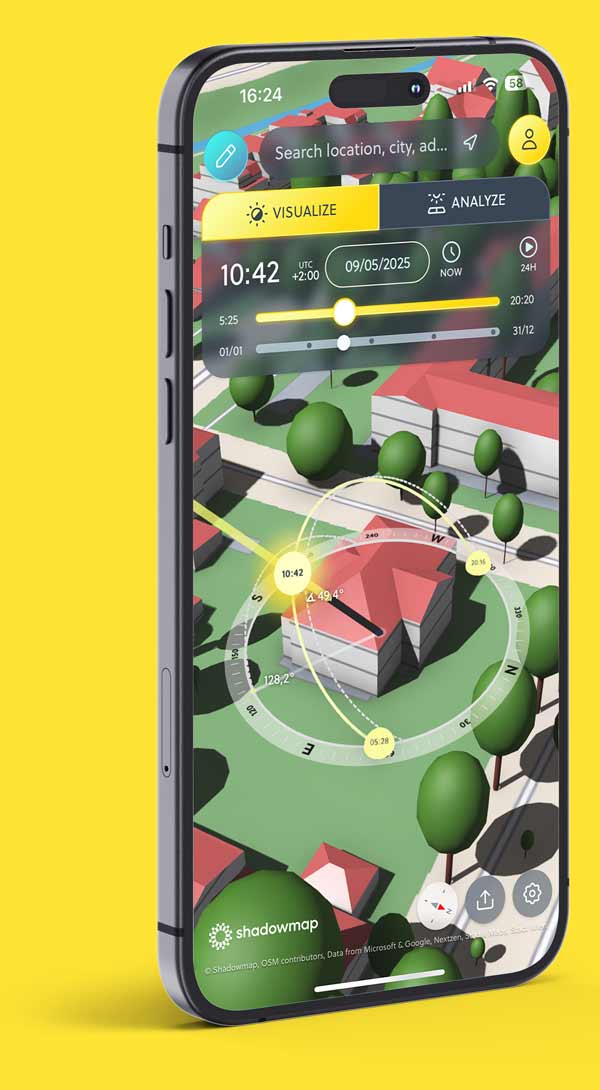
For ancestral populations who spent hours outdoors daily, these micro-exposures accumulated. An aspect that should serve to inform sunlight analysis and light-exposure modeling in modern urban planning.

Firelight, Infrared, and Thermal Stress: The Lost Half of the Ancestral Light Spectrum
Modern LED lighting emits almost no infrared. Premodern winter environments were saturated with it. Sources of ancestral infrared and red-spectrum light:
Infrared-dominant sunlight at low angles around winter
Firelight (from hearths, cooking fires, torches)
Saunas and sweat lodges
Hot springs (where available)
Heated stone pits in Arctic cultures
Ceramic stoves and fire-heated living spaces
Infrared therapy is now a major wellness trend, yet for 99% of human history it was simply daily life. Potential benefits supported by modern research are:
Mitochondrial stimulation
Tissue repair
Improved circulation
Mood stabilization
Circadian anchoring
Combined with cold exposure – another ancestral constant – winter environments created a rich thermal and light ecology that modern homes lack.
Some researchers like Glenn Jeffery refer to this deficit as infrared starvation, an underexplored factor in modern metabolic and mood disorders.
Rethinking Sunlight Risk: The Modern Sun-Scare Narrative is Breaking Down
Many health and evolutionary biology researchers now argue that sunlight avoidance causes more harm than moderate sunlight exposure.
Key points from current research by Richard Weller, Pelle Lindqvist, and others show the following:
Cardiovascular benefits from nitric oxide release may outweigh melanoma risk
Regular sun exposure is protective compared to intermittent vacation “sun bingeing”
The strongest melanoma correlation is with severe sunburn, not with everyday sun exposure
Avoidance of sun exposure is a risk factor for death of a similar magnitude as smoking
These and other findings show the urgent need for us to rethink the public image of sun exposure being a major health risk and coming up with a more accurate risk-benefit analysis for public health recommendations. And as always: further research is needed to fill in the gaps in our current understanding!
But we can already assume that ancestral humans rarely got sunburned because their exposure was daily, modest, and consistent, quite the opposite of modern patterns of indoor jobs and tropical vacations.

Conclusion: Relearning Our Ancestral Sun Strategy for Modern Health and Biohacking
To restore our natural relationship with sunlight and improve health outcomes, we can draw on ancestral patterns supported by modern science:
Spend more time outdoors daily
Practice sensible, non-burning sun exposure
Reintroduce infrared light (incandescent bulbs, red light therapy, sauna)
Increase winter movement to mobilize stored vitamin D
Optimize light hygiene at home and work
Use sunlight analysis to design better homes and living environments
Embrace seasonal living rather than constant indoor climate control
Humans are, in every sense, children of the Sun. By restoring even a fraction of our ancestral relationship with natural light, we can dramatically improve physical and mental health. Now, go out for a walk – what are you waiting for!
Share this article:

AS Seen On