Share:
What if everything you thought you knew about food, energy, and the nature of matter was only half the story?
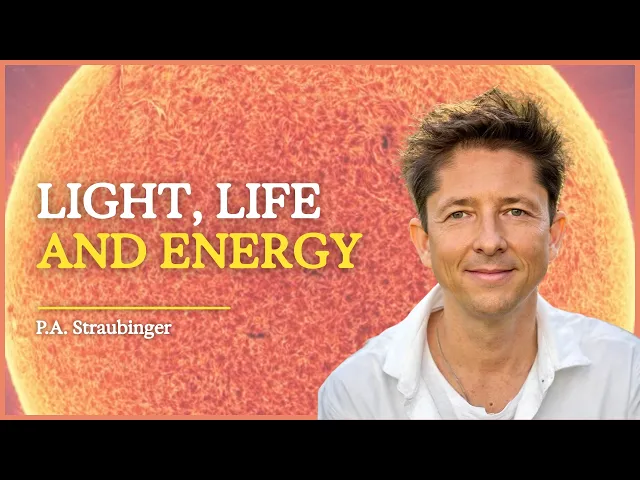
That's the provocative question at the heart of our latest podcast conversation with P.A. Straubinger, Austrian filmmaker, bestselling author, and the man behind the internationally acclaimed documentary In the Beginning There Was Light. Joining us from a sun-drenched Vienna, P.A. took us on a fascinating journey from the edges of nutritional science to the deepest questions about consciousness, life energy, and what it actually means to be alive.
From Film Academy to Breatharianism
P.A.'s story begins not in a laboratory, but at the Austrian Film Academy in the 1990s, where a growing interest in transpersonal psychology led him to meditation, yoga, and eventually to a teacher whose students whispered something extraordinary: he didn't eat.
That rumour sparked what would become fifteen years of research and filmmaking. The resulting documentary — ten years of research, five years of shooting across the globe — became a cultural phenomenon in Austria, outperforming most Hollywood releases at the cinema. In the Beginning There Was Light explores the phenomenon known as breatharianism (or Lichtnahrung, "light nourishment" in German), the reported ability of certain individuals to sustain themselves without conventional food.
But P.A. is quick to clarify what the film is really about. "It's not really about people who eat or not eat," he explains. "That's just the hook. In reality, it's about what life energy is. Why are we living, and how can we maximise it? And most importantly, questioning the materialistic worldview."
The Science Gap Nobody Talks About
Rather than relying solely on anecdote, P.A. brings a scientific lens to the conversation. He points to a landmark 1973 paper in Nature titled "How much food does man require?" — the answer, astonishingly, was: we don't really know. Individual variation is so enormous that a universal caloric formula simply doesn't hold.
He goes further, citing the work of NASA calorimeter engineer Dr Paul Webb, who found that in completely normal people, not breatharians, just ordinary individuals, up to 23% of the body's energy could not be accounted for calorically. As Webb reportedly noted, the better the measurements, the larger this unexplained gap became. During fasting, the gap grew even wider.
"Where is this energy coming from that we cannot account for?" P.A. asks. "In China, they call it chi. In India, prana. The idea that we absorb some life energy directly, not only through food, is ancient and cross-cultural. But modern science doesn't have the tools to measure it."
This isn't a rejection of science. It's an invitation to expand it.
Biophotons, Frozen Light, and the Information of Life
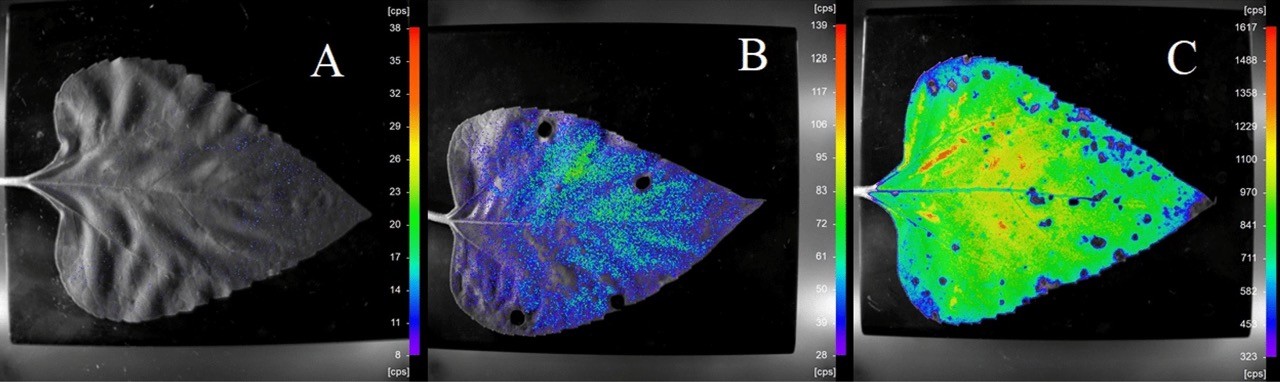
One of the most compelling threads in the conversation is the work of physicist Fritz Albert Popp on biophotons, the faint light radiation emitted by all living cells. Popp's research suggests that this "light of life" isn't just a metabolic by-product; it's a carrier of coherent biological information, stored in plants from the sun and passed on when we eat.
"If you look at the chemical formula of sugar," P.A. explains, "you can divide it into carbon dioxide and water, both of which leave the body. What stays is the light and the information in that light."
This connects to a broader idea: that matter itself is not the solid, mechanical stuff of Newtonian physics, but as physicist David Bohm described it, "frozen light." The solidity we experience is, in this view, an illusion of the senses, an idea that echoes the ancient Indian concept of Maya. "A lot of ideas from Eastern philosophy," P.A. observes, "are now more or less being proven by modern science."
The Church of Science
One of the most thought-provoking parts of our conversation concerned why mainstream science so aggressively resists these ideas. P.A. draws a sharp parallel: the institution of modern science has, in some ways, taken on the role once played by the Catholic Church, complete with priests (scientists), holy texts (peer-reviewed journals), and heretics (researchers who step outside the accepted paradigm).
"If you say something different, you are excluded from the Church of Science," he says. "But this is completely unscientific, because questioning ideas is the most important part of science."
Several scientists P.A. interviewed for the film lost their jobs, not because of anything in his movie, but simply for pursuing research that challenged dominant assumptions. Even improving a Wikipedia article with citations from legitimate medical journals proved futile when editors dismissed those sources as insufficiently credible, while accepting blog posts from sceptic groups.
His response to the Sceptic Society's "Biggest Nonsense of the Year" award? He attended the ceremony, thanked them warmly, and pointed out that their campaign had done wonders for his film's visibility. You can watch the full speech on YouTube (in German).
Light, Food, and the Way We Live
The conversation naturally bridges to more practical territory. If biophotons represent the information content of food and if sunlight is the source of that information, then what we eat, when we eat it, and how much we fast all take on new significance.
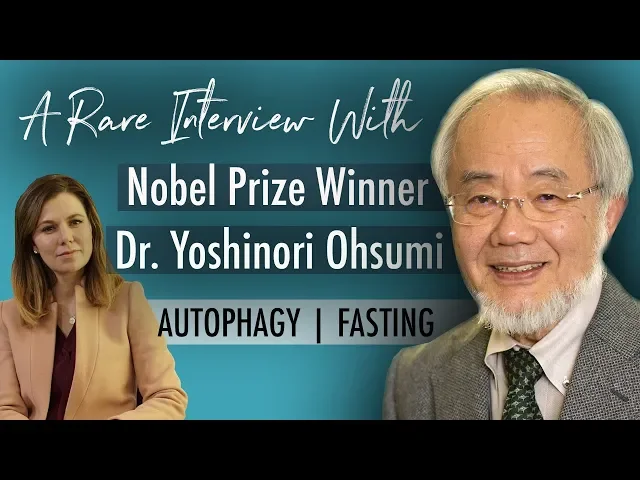
P.A. wrote three bestselling books on intermittent fasting after encountering the science of autophagy in 2008, years before it earned a Nobel Prize. He sees fasting not as a dietary trend but as a deeply connected practice: a way of allowing the body's direct uptake of life energy to become more pronounced when caloric intake is reduced.
For our host Dave, this connects to a personal evolution toward what he calls being a "qualitarian", prioritising food quality over quantity, and being much more mindful about eating as an intentional act rather than a reflex.
Meditation, Consciousness, and the Big Questions
Perhaps the most moving part of the conversation comes when Georg and P.A. reflect on why these ideas matter beyond the intellectual. Both speak of experiences, meditation, near-death accounts from friends, moments of expanded awareness that mainstream scientific frameworks simply cannot accommodate.
"If you ever reach a higher consciousness level or have an out-of-body experience," Georg reflects, "nobody can take that experience from you. And suddenly you wonder: how is all of this possible? The education I received doesn't answer these questions at all."
P.A. agrees. The goal isn't to abandon rational inquiry, it's to begin from a place of genuine openness. As Werner Heisenberg reportedly said, "If you take the first sip of the glass of science, you become an atheist. If you drink it to the bottom, you start to believe in God."
Shadowmap: Where Sunlight Meets Real Life
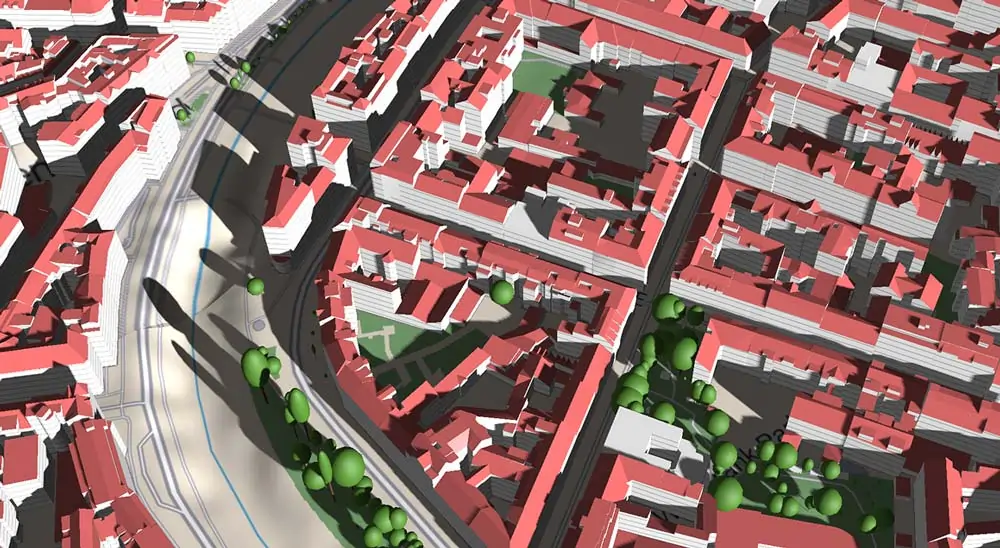
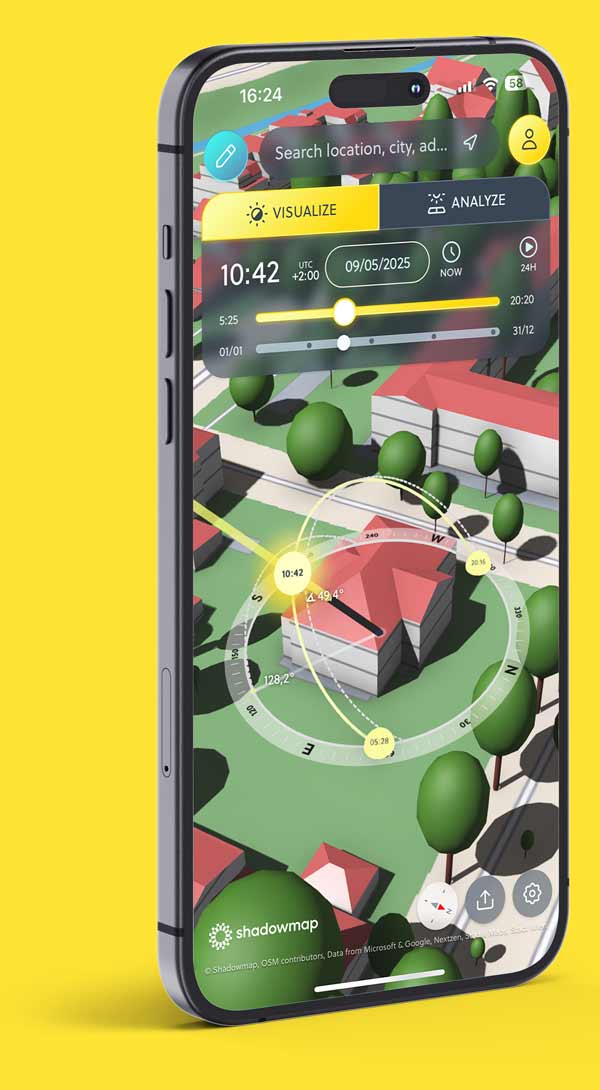
In a lovely twist, P.A. found us not through a wellness podcast or a philosophy forum, but through a real estate platform. He was searching for a mountain property and wanted to know how the sun would fall on 21 December — and discovered Shadowmap integrated into the listings.
"I thought this was an app from Silicon Valley," he admitted. "It looks so perfect."
For our team, it was a meaningful moment. If our work connects people more consciously to sunlight, helping them choose homes, spaces, and lives where natural light plays a central role, then perhaps we're contributing, in a small way, to exactly the kind of awakening P.A.'s film has been calling for.
As Dave put it: "If we can get more people outside and in the sunshine, living lives where sunlight is more aligned with their preferences, we can really help change things."
Watch the Film
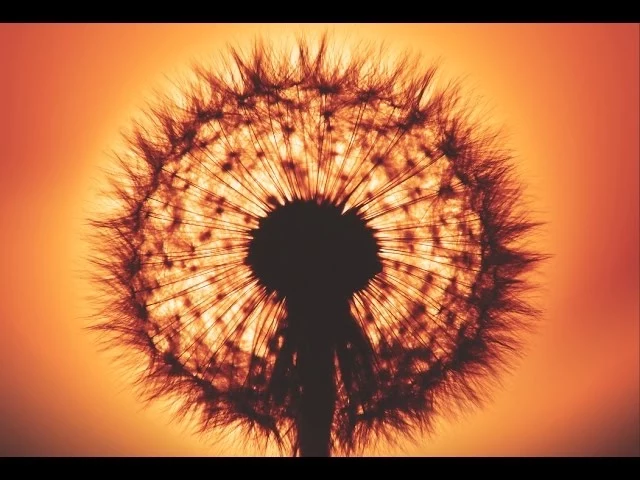
In the Beginning There Was Light is available to watch on www.lightdocumentary.com
Direct links to watch the movie on demand:
https://vimeo.com/ondemand/lightdocumentary (English subtitles)
https://vimeo.com/ondemand/lightus (English Voice Over)
And with a subscription on GAIA
Scientific references and supporting studies are listed at lightdocumentary.com. We strongly encourage you to watch it. Not because it will give you all the answers, but because it asks exactly the right questions.
"This film doesn't get old," P.A. told us with a smile. "The next 3,000 years, it works."
Share this article:
LEARN MORE
Illuminating insights


AS Seen On